A market opening
iAbout Press releases
As part of our continuing efforts to bring you as much information about our region as possible we offer readers a press release service that allows private firms, public agencies, non-governmental organisations and other groups to submit relevant press releases on our website.
All press releases in this section are published in their full length and have not been edited.
If you have a press release or other announcement you would like to have published, please send it to [email protected].
We reserve the right to reject press releases we deem irrelevant or inappropriate.
All material submitted to The Arctic Journal, including pictures and videos, will be assumed to be available for publication by The Arctic Journal and its related entities.
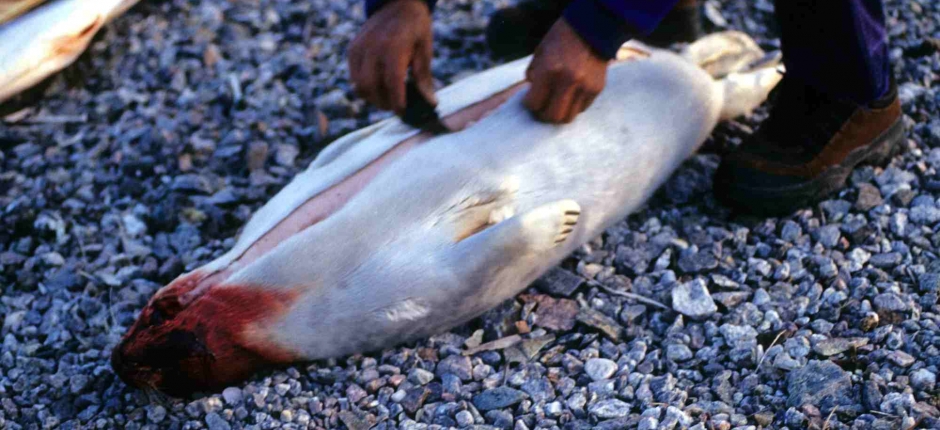
Inuit hunters from Nunavut can now sell seal products in the European market. Such products were banned by the European Union in 2009, but on July 31 it ruled that the territory’s Inuit hunters would be included under an exemption that allows the import of products from seal killed by subsistence hunters.
By exempting Nunavut from the ban, the EU declares that it is satisfied that the Government of Nunavut, the territorial administration, can certify the seals are hunted humanely and as part of traditional subsistence hunting. The GN and Greenland’s Self-Rule Authority are the only two organisations that hold Registered Body status under the Indigenous Community exemption. Nunavut hunters who want to sell seals in the European market must go through the GN.
A new wording of the ban is winding its way through the European Parliament. Revising the ban is necessary in order to bring it in line with a 2014 World Trade Organisation ruling that, while upholding its overall validity, even though it limits trade, challenged its two exemptions: one for products from seal killed by subsistence hunters and one for products killed in maritime resource-management hunts (killing seals that threaten fisheries), arguing that they could have discriminatory effects.
SEE RELATED: Editor’s Briefing | Seals
The GN buys seal pelts from hunters and co-ordinates with a fur auction house in southern Canada to tan, grade and resell the pelts to Canadian and international buyers. Residents of Nunavut are the biggest market for dressed sealskins and the GN will continue to focus on the local market. For the exemption to be effective the GN will turn to the EU for help to build markets in Europe.
The EU recognises that the ban, imposed out of a concern for animal welfare, resulted in a drop in prices of sealskin, and in turn affected the ability of many Inuit to earn a living. Members of the European Parliament have asked the European Commission and member states to organise awareness-raising campaigns to “counter widespread negative portrayals and misunderstandings of seal hunts conducted by Inuits [sic] and other indigenous peoples”.
Ottawa has also pledged support. It will be spending C$5.7 million ($4.3 million) over the next five years on a programme to assist Canadian sealers in finding new markets and supporting certification systems. It is also looking at ways that sealers in other Canadian jurisdictions can benefit from the exemption.
Nunavut Tunngavik Incorporated, the body representing the territory’s Inuit, said the exemption did not change the organisation’s opinion of the ban.
“The European Union’s ban is based on misinformation and misguided public opinion, not any conservation concerns,” James Eetoolook, the NTI vice-president, said.
In addition, Mr Eetoolook noted the exemption does not apply to seal products from Labrador, northern Quebec and the Northwest Territories.