ILO Convention no 169
iAbout Press releases
As part of our continuing efforts to bring you as much information about our region as possible we offer readers a press release service that allows private firms, public agencies, non-governmental organisations and other groups to submit relevant press releases on our website.
All press releases in this section are published in their full length and have not been edited.
If you have a press release or other announcement you would like to have published, please send it to [email protected].
We reserve the right to reject press releases we deem irrelevant or inappropriate.
All material submitted to The Arctic Journal, including pictures and videos, will be assumed to be available for publication by The Arctic Journal and its related entities.
In our newest feature, The Arctic Journal each week explains a topic related to the region. Some you may have wondered about yourself. Others you may have never considered. Either way, we hope you’ll learn something new. If you have a topic you’d like explained, please contact us.
The politics toward indigenous peoples of the Arctic have been through major changes through history. During the past half century or so, the International Labour Organisation, a UN agency, has been a key player in trying to protect indigenous culture, tradition and identity.
How is it, though, that the ILO came to address the rights of indigenous peoples?
It began in 1957, when the agency addressed the situation of “native workers” in convention no 107, dealing with “indigenous and tribal populations” and the economic issues they face. The agreement was ratified by 27 countries, none of them Arctic states.
The convention sought to define the obligation states had towards indigenous groups, particularly in the areas of land, recruitment and conditions of employment, vocational training, handicrafts and rural industries, social security and health and communication.
SEE RELATED: Future of Arctic not as smooth as it appears
The weakness of the convention led to the development of a second, no 169, in 1989.
Like its predecessor, convention no 169 is intended as a way for indigenous peoples to gain more self-determination, political influence and to maintain and develop their own culture, traditions and language. Convention no 169 does not seek to define what an indigenous group is.
Indigenous groups in the Arctic, as in other regions, have gradually earned the right to self-determination after long periods of varying degrees of forced assimilation and cultural oppression. This had given rise to movements to reinvigorate indigenous culture and languages.
So far 22 states have ratified the convention. Only two Arctic states, Norway and Denmark, are among them. Other states have hesitated.
SEE RELATED: Indigenous delegates raise food, health concerns
Most recently, in June, Sweden refused for a second time to ratify the convention (it first took it up in 2010). In March, Finland put off a proposal to vote on the convention, but on the argument that the Eduskunta, the national assembly, would not have had enough time to consider the measure before the session ended.
Both countries are involved in land disputes with the Sami. But, even so, the convention has influenced policymaking in these countries.
Canada and Russia, meanwhile, have rejected the convention arguing that it would conflict with existing political traditions and domestic legislation.
Another concern is that the convention would be an enormous burden for national authorities. In Russia, for example, several groups of more than one million individuals would be able to claim status and rights as indigenous based on the guidelines of the convention.
SEE RELATED: Defining ‘indigenous’: views on traditional and modern assessments
Instead, Russian legislation has its own approach to the issue, recognising “indigenous small-numbered peoples”(groups with less than 50,000 people). Canadian legislation defining groups as “indigenous” (such as the Indian Act) has existed for over a century, and has been changed and adapted several times.
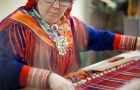
One of the challenges for governments is how to balance the interests of sometimes competing constituencies. The total population of Finnish Lappland, where the majority of the country’s Sami population lives, is 180,000, for example. The total number of Sami, though, is just 10,000. That is perhaps all the more reason to ratify the convention.