A seal of disapproval

iAbout Press releases
As part of our continuing efforts to bring you as much information about our region as possible we offer readers a press release service that allows private firms, public agencies, non-governmental organisations and other groups to submit relevant press releases on our website.
All press releases in this section are published in their full length and have not been edited.
If you have a press release or other announcement you would like to have published, please send it to [email protected].
We reserve the right to reject press releases we deem irrelevant or inappropriate.
All material submitted to The Arctic Journal, including pictures and videos, will be assumed to be available for publication by The Arctic Journal and its related entities.
Greenland’s representatives in the Danish parliament say they are ready to block EU efforts to become a permanent observer of the Arctic Council if Brussels does not alter its stance towards seal hunting.
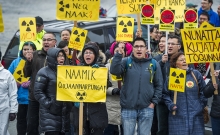
“We’ve read the European Commission’s latest proposal. We interpret it as a further erosion of Greenland’s ability to export sealskin, which is something we of course can’t accept,” said Johan Lund Olsen, one of two of Greenland’s elected representatives in the Folketing.
The revision of the EU ban on imports of seal products was put forward earlier this month by the European Commission. The changes were made after the WTO expressed its concern with parts of the ban, including its so-called Inuit exemption, allowing indigenous hunters to continue to export sealskin to Europe.
SEE RELATED: Hot under their collars
In response to the WTO ruling, which addressed a Canadian and Norwegian complaint, Brussels has proposed altering the wording of the ban in order to be able to establish limits on the amount of sealskin that can be imported.
The measure is intended as a way to ensure that the exemption, meant as a way to support subsistence hunters, is not exploited in order to conduct commercial hunting.
Olsen said he would ask the Danish Foreign Ministry to look into the impact the revised rule would have on Greenland’s sealskin exports.
Doris Jakobsen, Greenland’s other representative in Copenhagen, is ready to take the matter further. Jakobsen, who described the EU’s stance on seal hunting as a double standard that discriminated against seal hunters, warned that the ban was having an effect on its relationship with Arctic countries.
“I think it is high time EU member states think carefully about what role they want to play in the Arctic,” she said.
SEE RELATED: Editor’s briefing | Seals
Jakobsen was responding to wording on a commission website explaining that the ban’s impetus was concern that the most widely used forms of hunting seal “caused avoidable pain and distress”.
Those methods include shooting, the most common method for hunting seals in Greenland, as well as netting and clubbing, the method used by Canadian commercial seal hunters and demonised by environmental groups over the years.
“According to the EU’s proposal, there is no acceptable way to hunt seal,” she said.
Jakobsen noted, however, that even though Brussels has banned imports of seal products killed by hunters with rifles, it is permitted to hunt a wide range of European animals in the same manner.
“I’m not sure how the EU thinks you can kill a wild animal without shooting it,” she said. “It’s not like it’s tied up in a barn.”
SEE RELATED: Better than a #sealfie
When the ban originally came into effect in 2010, the EU expected that by including limited exemptions it would be able to soften the blow of the ban on Inuit and other indigenous communities.
Seal hunters, however, say that the ban has cast all seal products in a bad light, regardless of where they came from, and that despite the exemption, their livelihoods has suffered as a result.
In 2013, the row led to the EU being denied permanent observer status in the Arctic Council until it addressed concerns raised about the impact of the sealskin ban. Brussels is expected to try again for a permanent seat during this year's biennial Arctic Council meeting. Jakobsen however, warned that unless changes were made to the proposed ban, the EU could find itself out in the cold once again.