Towards a more perfect exemption
iAbout Press releases
As part of our continuing efforts to bring you as much information about our region as possible we offer readers a press release service that allows private firms, public agencies, non-governmental organisations and other groups to submit relevant press releases on our website.
All press releases in this section are published in their full length and have not been edited.
If you have a press release or other announcement you would like to have published, please send it to [email protected].
We reserve the right to reject press releases we deem irrelevant or inappropriate.
All material submitted to The Arctic Journal, including pictures and videos, will be assumed to be available for publication by The Arctic Journal and its related entities.
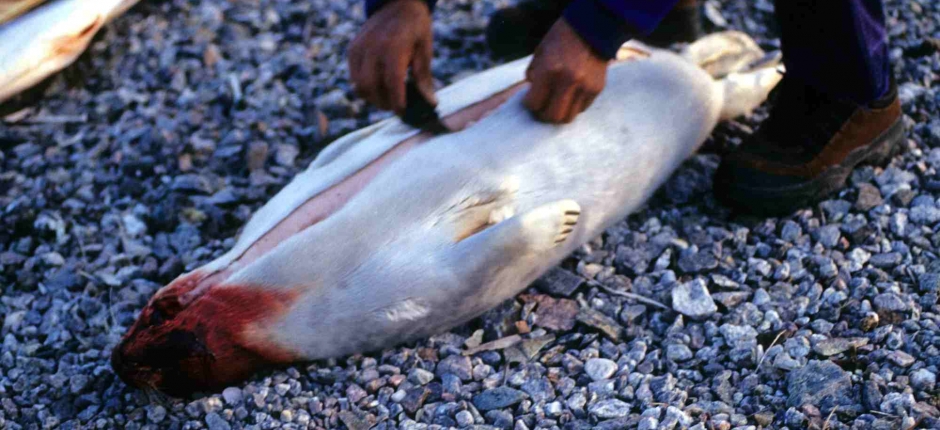
When the EU banned seal products in 2009, the rationale was that it was protecting seals from inhumane treatment. The problem, say Inuit, was that ban did not do enough to protect those whose livelihood depended on being able to sell seal products in Europe.
The European Parliament yesterday moved one step closer to bridging the gap between those to positions when its Internal Market Committee approved proposed changes to the ban.
Revising the ban is necessary in order to bring it in line with a 2014 World Trade Organisation ruling that, while upholding its overall validity, even though it limits trade, challenged its two exemptions, one for produces from subsistence hunts and one for products from maritime resource-management hunts (killing seals that threaten fisheries), arguing that they could have discriminatory effects.
SEE RELATED: Looking for sense, not sensibility, in EU seal policy
The committee, on Wednesday, responded, firstly, by proposing to eliminate the marine resource-management exemption, to the disappointment of Sweden, Finland and Latvia, and, secondly, by suggesting that the Inuit exemption be modified.
The changes would continue to permit Inuit imports, but only if their hunts are conducted with regard to animal welfare, are a part of their community’s culture and contribute to its subsistence.
In order to satisfy animal-rights minded MEPs leery that the exemption would be abused, the modification will make it possible to suspend the exemption if the hunts are found to conducted mostly for commercial purposes.
SEE RELATED: Is this the face of an atrocious person?
Hunters will see some of their beefs addressed as well. The proposed revision calls for renewed efforts to make European consumers aware of the exemption (such a measure is called for by the existing ban, but the Inuit say it has failed miserably) and by mandating that the effect of the ban be assessed.
The measure, which passed by an unexpectedly wide margin of 33 votes to 2, must now be considered by the Council of Ministers before it can be voted on by the full parliament.
Splitting the ban, it appears, may be the best way to bridge the gap.