Coming soon to an off-shore near you
iAbout Press releases
As part of our continuing efforts to bring you as much information about our region as possible we offer readers a press release service that allows private firms, public agencies, non-governmental organisations and other groups to submit relevant press releases on our website.
All press releases in this section are published in their full length and have not been edited.
If you have a press release or other announcement you would like to have published, please send it to [email protected].
We reserve the right to reject press releases we deem irrelevant or inappropriate.
All material submitted to The Arctic Journal, including pictures and videos, will be assumed to be available for publication by The Arctic Journal and its related entities.
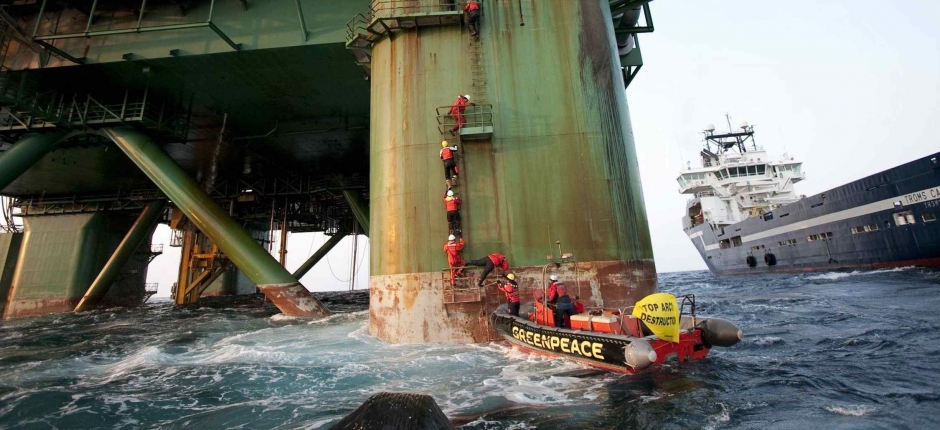
Greenpeace has confirmed that it plans to dispatch a ship later this month to an area where Greenlandic authorities have given permission to conduct seismic surveys for oil and gas.
The environmental group is concerned that Naalakkersuisut, Greenland’s elected government, for the second year running, will allow the surveys, which involve firing blasts of loud noise at the sea floor, in an area where several species of whale and other marine mammals live.
In December 2013, Greenlandic authorities awarded exploration licences to a group of firms that includes companies like Eni, Shell and Chevron, to begin exploring the area for possible oil and gas deposits.
SEE RELATED: A sometime friend
Greenpeace has staged a number of at-sea protests against oil drilling. In Greenland, members of the organisation boarded drilling rigs exploring for oil off the Greenland’s western coast in both 2010 and 2011.
With a potential 31 billion barrels of oil, the seas off eastern Greenland are considered to be promising: the US Geological Survey, a federal agency, ranks if fourth out of a total of 25 potential oil reserves in the Arctic. Getting at it, however, won't be easy, due to the year round ice. It is estimated that it could take as many as 50 test drills before any oil is found.
Before it gets that far, oil firms must conduct thorough studies of the underground to determine where the most promising areas are. Greenpeace fears that the seismic surveys required to do so can injure marine animals and damage their hearing, rendering them unable to navigate, hunt or communicate with other whales.
SEE RELATED: New Barents drill on Statoil horizon
Similar plans for seismic surveys in the Greenlandic and Canadian areas of Baffin Bay have also met with criticism.
In May, legal action taken to stop the surveys in Nunavut on the grounds they would spoil marine hunting grounds led to the group of companies planning to conduct the testing to cancel their activities for 2015.
According to Greenlandic officials, drilling one or two test wells per year will cost $500 million, and firms currently holding licences will have the right to explore for oil for a 16-year period. Any drilling would likely first begin in over a decade.
For Greenpeace the strategy may turn out to be protest early, protest often.