A timely announcement
iAbout Press releases
As part of our continuing efforts to bring you as much information about our region as possible we offer readers a press release service that allows private firms, public agencies, non-governmental organisations and other groups to submit relevant press releases on our website.
All press releases in this section are published in their full length and have not been edited.
If you have a press release or other announcement you would like to have published, please send it to [email protected].
We reserve the right to reject press releases we deem irrelevant or inappropriate.
All material submitted to The Arctic Journal, including pictures and videos, will be assumed to be available for publication by The Arctic Journal and its related entities.
Norway and Russia next week are expected to sign an agreement establishing a notification procedure in the event of a nuclear accident.
Under the terms of a similar 1993 agreement, Norway has regularly been permitted to to observe Russian nuclear response exercises. The new deal will require Moscow to hold additional exercises in order to test the new procedures.
The warning system, though not a means of preventing accidents, would provide Norwegian authorities additional time to respond in the event of a meltdown or other catastrophe.
“The new procedures we are now establishing with Russia will ensure early notification in the event of a nuclear incident, which is crucial for Norway's emergency preparedness,” Børge Brende, Norway’s foreign minister, said in a statement earlier this week.
SEE RELATED: Editor’s Briefing | A declaration of dependence
Concerns about a Russian nuclear accident are far from hypothetical. Norway, for example, still tests animals and humans for signs of effects from the 1986 Chernobyl nuclear accident. Chernobyl, however, is located some 1,500km from Norway. Russia operates two nuclear power plants within 200km of the Norwegian border. At that distance, Norwegian authorities currently have two hours to prepare for fallout from a nuclear accident.
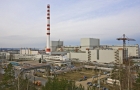
The state of both plants leaves experts ill at-ease. The first, near St Petersburg, was built using the same graphite cooling system that is blamed as the cause of the Chernobyl disaster. The second facility, on the Kola Peninsula, was built in the 1970s and has already seen the shut-down date of two of its four reactors extended multiple times.
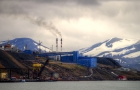
Nuclear power plants, however, are just one of Oslo’s concerns. In addition to radioactive batteries used in Soviet-era lighthouses, Statens Strålevern, Norway’s nuclear protection authority, keeps an eye nuclear waste piling up at Andreyeva Bay, near Murmansk less than 50km from the Norwegian border.
SEE RELATED: Broken vows and arrows
Another potential concern are the 19 ships, containing 14 reactors and some 17,000 barrels of radioactive waste, that were scuttled off Russia's northern coast during the Soviet era. Some scientists also worry that refuelling of nuclear-powered ships could lead to an accident.
The immediate outcome of the agreement will be to give Norwegians a greater sense of security in the event one of these threats turn hot. Mr Brende, however, suggested that the agreement was a sign that relations between Norway and Russia remain workable, despite tension over issues like Ukraine.
“The joint notification procedures confirm once again that co-operation between Norway and Russia in this field is helping to build trust and enhance security on both sides of the border,” he said.