After retreat, Greenpeace considers next move
iAbout Press releases
As part of our continuing efforts to bring you as much information about our region as possible we offer readers a press release service that allows private firms, public agencies, non-governmental organisations and other groups to submit relevant press releases on our website.
All press releases in this section are published in their full length and have not been edited.
If you have a press release or other announcement you would like to have published, please send it to [email protected].
We reserve the right to reject press releases we deem irrelevant or inappropriate.
All material submitted to The Arctic Journal, including pictures and videos, will be assumed to be available for publication by The Arctic Journal and its related entities.
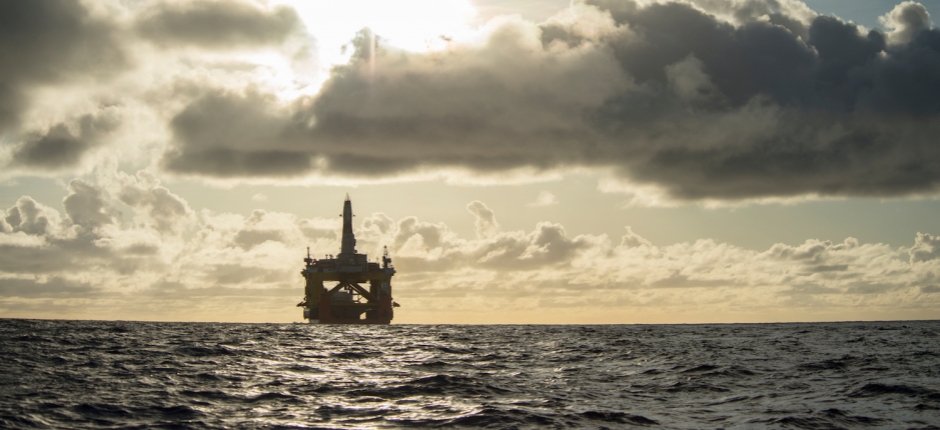
In its most recent protest against Arctic oil drilling, Greenpeace, an conservation group, boarded six activists onto a drilling rig being transported across the Pacific Ocean to Seattle and expected to be used by Shell, an oil firm, this summer in Alaska.
While Greenpeace should get full marks for the spectacle it created and for using the Polar Pioneer itself as a platform to draw attention to the risks of Arctic drilling, some suggest it may have been an exercise in futility.
According to Lee Ahern, the chair of the International Environmental Communication Association, the protest, which ended over the weekend when deteriorating weather conditions forced the protestors to return to the Esperanza, a Greenpeace vessel, is unlikely to have an effect of Shell’s plans.
“Their investors have bought shares based on their known reserves, meaning Shell is also obligated to proceed with its business plans,” he says. “Arctic drilling may be given up at some point in the future but these direct actions won’t lead to any kind of abandonment.”
SEE RELATED: Greenpeace and the juggernaut
Boarding drilling rigs may attract attention, but, Dr Ahern argues, changing people’s attitudes will take time. Perhaps a generation or so, he reckons.
Even though the six activists – from the US, Germany, New Zealand, Australia, Sweden and Austria – had to fall back to the Esperanza, which has been dogging the Polar Pioneer and its transport vessel, the Blue Marlin, since it entered the East China Sea heading east last month, it would be hard to call the effort a failure. Millions of messages in support of the protest were sent over social media, it was well covered by the media (including this website) and it pushed the number of people signed up in support of Greenpeace’s efforts to prevent Arctic drilling to nearly seven million.
John Carroll, a media analyst at Boston University, says Greenpeace couldn’t have hoped for more.
“The approach is of course to be as dramatic as possible and what could be more dramatic than scaling an oil rig in the middle of the Pacific Ocean? They’re also chronically on all social media fronts where they are building up a critical mass, leading to a co-ordinated, choreographed message which in the end is just like a political campaign.”
Dr Ahern agrees. He notes in particular Greenpeace’s depiction of the six activists as characters in a narrative.
“This tactic is shown to be very effective and much more memorable in terms of reaching your audience," he says.
SEE RELATED: “This is a fight between the people and Shell”
While over 40 years of campaigning has earned Greenpeace valuable brand-recognition, Dr Ahern suggests that some of the organisation’s tactics, like dramatic protests, can have a negative short-term impact.
“It takes a delicate balance to walk the line between direct action and popular communication,” he says. “Direct actions are going to appeal to the more ardent members of the community, but they also have the potential to alienate people with a basic interest in the issue.”
Dr Ahern's research finds that environmental organisations in general tend to focus on what is known as the information deficit model, that is, the assumption that a sceptical or uniformed public will change its opinion, provided they receive adequate information. “But it's way more complex than that,” he says.
A vast number of people have strong emotions towards upstream worldviews that can take decades to challenge, he adds. “Believe it or not, a lot of corporate organisations and interests understand the way people form attitudes and the role of emotion better than a lot of the environmental organisations.”
Environmental organisations, he explains, remain highly informational and tend to focus on loss or risk with a negative overall tone. Corporate advertising, on the other hand, tends to be more positive and focus on the benefits of our actions.
SEE RELATED: Crying Arctic wolf?
The Blue Marlin and the Polar Pioneer are due to arrive in Seattle later this month. Greenpeace has vowed to keep the pressure on Shell.
“Stepping off this oil rig is not the end of something, but just a transition to the next step of saving the Arctic,” Aliyah Field, one of the six activists who boarded the Polar Pioneer, says.
While Shell has stated that it has no intentions of backing down, some believe a compromise could be possible.
Lucy Atkinson, a professor of public relations and environmental science at the University of Texas, thinks Greenpeace could eventually pressure Shell to alter their plans, like it has done with large companies like Nestlé, a food conglomerate, and Lego, a toymaker that had a partnership with Shell, in the past.
“I don’t think their intention is to ruin Shell entirely, I think their goal is to get Shell to engage in a dialogue which might result in an alternative solution,” she says.
SEE RELATED: A sometime friend
Others are more sceptical. Will Coggin, the director of research for the Environmental Policy Alliance, an NGO, says Greenpeace in the US hasn’t been able to stop the expansion programmes aimed at extracting energy resources.
Greenpeace, he says, is the “Peta [an animal rights group known for its fundamentalist approach] of the environmental movement” has become known for what he considers to be ridiculous antics.
“[Their campaigns] certainly show that they can’t win the debate on legitimate terms,” he says.
Greenpeace, however, has shown no signs of being affected by the criticism. The Esperanza, for example, is still perusing the Polar Pioneer, and on Sunday Greenpeace issued a public call for ideas on how to stop Arctic drilling.
“We’re all truly committed to this and will continue pushing to shed light on these destructive actions, however long it takes,” John Deans, an Arctic campaigner, said.