Climate change is the new over-hunting
iAbout Press releases
As part of our continuing efforts to bring you as much information about our region as possible we offer readers a press release service that allows private firms, public agencies, non-governmental organisations and other groups to submit relevant press releases on our website.
All press releases in this section are published in their full length and have not been edited.
If you have a press release or other announcement you would like to have published, please send it to [email protected].
We reserve the right to reject press releases we deem irrelevant or inappropriate.
All material submitted to The Arctic Journal, including pictures and videos, will be assumed to be available for publication by The Arctic Journal and its related entities.
Threats to polar bear populations
The CAP identifies and addresses the following seven threats that are currently impacting, or most likely to have an impact, on the polar bear and its habitat in the next 10 years.
1) Climate change
2) Disease
3) Human-caused mortality
4) Mineral and energy resource exploration and development
5) Contaminants and pollution
6) Shipping
7) Tourism and related activities
Objectives of the CAP
In order to achieve the goal of the CAP, the range states have developed six key objectives that address the aforementioned threats.
1) Minimise threats to polar bears and their habitat through adaptive management based on co-ordinated research and monitoring efforts, use of predictive models and interaction with interested or affected parties
2) Communicate to the public, policy makers and legislators around the world the importance of mitigating greenhouse gas emissions to polar-bear conservation
3) Ensure the preservation and protection of essential polar-bear habitat
4) Ensure responsible harvest-management systems that will sustain polar-bear subpopulations for future generations
5) Manage human-bear interactions to ensure human safety and to minimise polar-bear injury or mortality
6) Ensure that international legal trade of polar bears is carried out according to conservation principles and that poaching and illegal trade is curtailed
Source: polarbear2015.gl
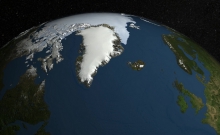
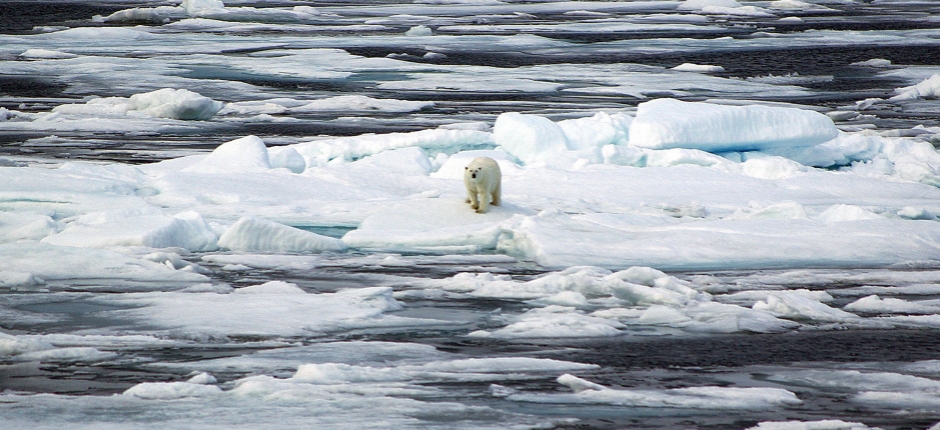
In the long-run, there is but one way to protect polar-bear populations: prevent global warming.
Addressing that problem, admit the five so-called ‘range states’ that have polar-bear populations, is a matter for higher international powers. Still, that will not prevent the diplomats and other experts meeting in Ilulissat, Greenland, this week from finalising a strategy to provide immediate protection for the species.
When the three-day meeting concludes on Thursday, delegates are expected to have finalised the ‘circumpolar action plan’, a document that has been underway since 2011, and would identify measures that range states can take jointly over the next ten years in order to mitigate the impacts of warming temperatures.
SEE RELATED: Editor’s Briefing | Polar bears
The CAP is one of three ways range states are seeking to address the health of polar-bear populations. In addition to committing themselves to efforts to address the effects of global warming, they have also agreed to draw up their own national management plans.
These national plans, such as the one drawn up by the United States earlier this year, focus on measures that can be taken by an individual country. Measures can be taken to reverse habitat-loss in the long-term can only be taken internationally.
Falling somewhere in between is the CAP. Its guidelines, which detail the common objectives that range states share, are intended to supplement the national plans. This can be done helping to spread scientific information, as well as practical information about conservation measures and monitoring.
“The action plan,” says Geoff York, a biologist with Polar Bears International, a conservancy, “deals with areas where working together increases the chances of success.”
SEE RELATED: Arctic states renew vow to help polar bears
Even if the action plan is finalised during this week’s meeting, getting all five states to sign the document could take “a couple of years”, says Dag Vongreven, a biologist who leads the polar-bear specialist group for IUCN, an agency that determines how viable plant and animal populations are.
The signatures, however, are simply the final endorsement, Mr Vongreven says. He reckons that the working groups set up by the plan – including one that exchanges information about how to prevent bear-human conflict and one to determine the impact of trading in polar-bear products – could begin as soon as the states agree in principle.
Efforts to draw up the CAP mark the second time the range states have sat down to come up with ways to protect the polar bear. The 1973 Agreement on the Conservation of Polar Bears sought to address over-hunting, then the largest threat to the species.
The harvest-management programmes and protected areas established under the agreement, according to Mr Vongreven, worked.
“Until 2001, everything was fine,” he says. “But climate change has upset the situation again. Now it is climate change that is the new risk.”
More infomation about this week’s meeting, as well as the Agreement on the Conservation of Polar Bears is avilable at polarbear2015.gl.