The week ahead – September 7-13
iAbout Press releases
As part of our continuing efforts to bring you as much information about our region as possible we offer readers a press release service that allows private firms, public agencies, non-governmental organisations and other groups to submit relevant press releases on our website.
All press releases in this section are published in their full length and have not been edited.
If you have a press release or other announcement you would like to have published, please send it to [email protected].
We reserve the right to reject press releases we deem irrelevant or inappropriate.
All material submitted to The Arctic Journal, including pictures and videos, will be assumed to be available for publication by The Arctic Journal and its related entities.
Each Monday, we give a brief run-down of some of the events and issues affecting the Arctic we’ll be paying attention to in the coming week. If you have an event you think should be included next week, please contact us.
The lands of opportunity
Much has been made about the economic prospects of the North but is it also a land of opportunity for refugees? This week will see particularly European countries, and in our region this includes primarily Finland, Sweden and Norway, looking for ways to accommodate the stream of refugees.
The matter has already been a topic of discussion in the region after reports in recent weeks that some refugees found it safer to enter Europe by crossing the Russia-Norway border than through southern Europe.
Many of those coming to Europe would like to end in Sweden, which has done much to accept those fleeing the civil war in Syria. Perhaps taking the moral high-ground, Margot Wallström, the foreign minister, criticised Finland by name last week, reminding its neighbour that many Finnish children were given refuge in Sweden during the Second World War.
SEE RELATED: Peace, love and snow
Finland declined to respond directly to the prodding, but Juha Sipilä, the prime minister, stated on Saturday that he would make his home in Oulu, which he rarely used, available to refugee families.
Helsinki has also announced it will double the number of refugees it accepted this year, to 30,000. That number is still well below the 100,000 Sweden accepts.
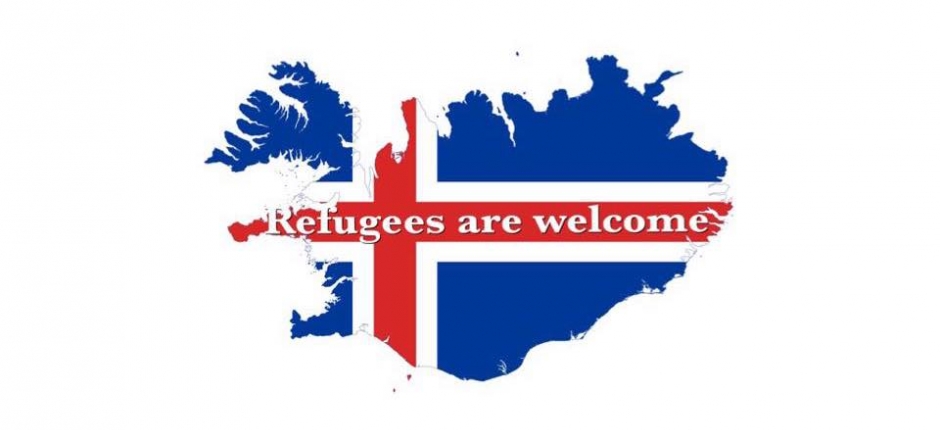
Refugees have also been a matter of heated debate further west, in the Faroe Islands and Iceland. Last week, the issue was suggested as playing a possible role in the outcome of the September 1 general election in the Faroe Islands. In Iceland, meanwhile 17,000 people have joined a Facebook petition calling on Sigmundur Davíð Gunnlaugsson, the prime minister, to increase the number of refugees from the planned 50 families he announced last week.
Even with the increased attention, Pål Nesse, of Flyktninghjelpen, an organisation that helps refguees, told the Barents Observer, the number remained low compared with southern Europe. “This is still not a problem,” he said.
With many areas facing population decline and with an economy poised to grow, it could actually be the opposite.
Money for something
Businesses in Greenland trying to raise capital will this week will be given a closer look at their newest option.
Since July, firms in both Greenland and the Faroe Islands have been able to apply for loans, grants or other forms of financing from Vækstfonden, a Danish state-operated investment fund.
As part of their efforts to spread information about the financing options Væsktfonden offers, representatives from the organisation will call on towns along Greenland’s western coast this week as part of Seashow, a sailing education convention.
Since 1992, Vækstfonden, which has 4 billion kroner ($600 million) in assets, has assisted over 5,000 firms in metropolitan Denmark. Those firms, according to Vækstfonden, have generated 70 billion in revenue.