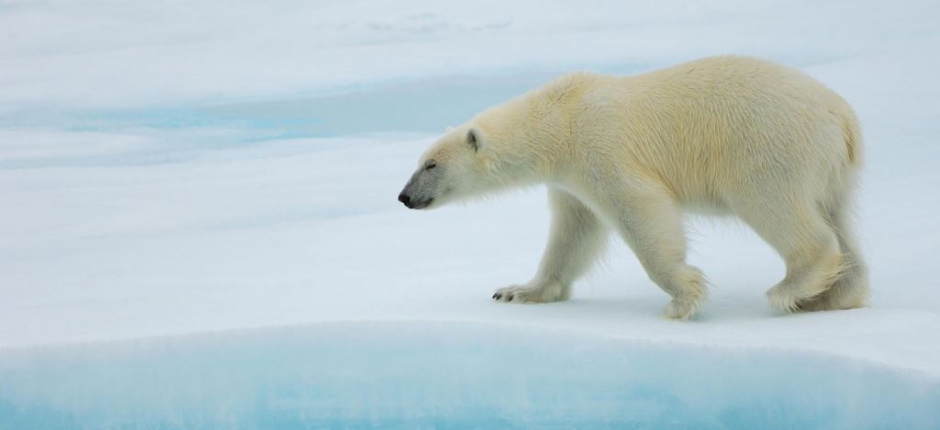
Making polar bears dangerous again
iAbout Press releases
As part of our continuing efforts to bring you as much information about our region as possible we offer readers a press release service that allows private firms, public agencies, non-governmental organisations and other groups to submit relevant press releases on our website.
All press releases in this section are published in their full length and have not been edited.
If you have a press release or other announcement you would like to have published, please send it to [email protected].
We reserve the right to reject press releases we deem irrelevant or inappropriate.
All material submitted to The Arctic Journal, including pictures and videos, will be assumed to be available for publication by The Arctic Journal and its related entities.
The Arctic is often called one of the last pristine paradises on Planet Earth. But, as singer Don Henley once wrote, “Call someplace paradise, kiss it goodbye.”
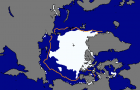
As the climate debate rages, and humans make deeper inroads into the once forbidding realm of the far north, Denmark’s Louisiana Museum of Modern Art has organised an exhibition entitled ‘ARCTIC’, taking a multifaceted look at what the Arctic once was, what it is now, and, finally, what its future might be.
“Part of the function of a museum is to preserve things and artefacts that would otherwise disappear,” said Poul Erik Tøjner, the museum’s director. “We started to wonder what it would do to our collective consciousness if the North Pole were to simply not be there anymore.”
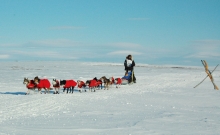
The multimedia exhibit reveals the Arctic using classic Romantic images and contemporary art, authentic expedition photos, scientific specimens, historical material, the written word and sound. There are films, photos, paintings, dioramas and more displaying both the great joy and fear that go hand and hand when exploring and examining the Arctic.
Expedition as art
While fully capturing the North’s magic and the raging beauty that has fascinated and captivated humans for generations, the Arctic does not shy away from the deadly consequences that sometimes accompany that obsession. ARCTIC looks at six of the most significant Northern expeditions by Sir John Franklin, Fridtjof Nansen, Salomon Andrée, Frederick Cook, Robert Peary and Knud Rasmussen.
While the exhibit does not shy away from the climate, political and commercial interests that also hold sway over the Arctic, Tøjner was quick to point out that ARCTIC is not a climate-change piece.
“A museum is not a political forum,” he said. “By creating this exhibition and allowing it to be as broad as it is, I think the public can see the debate in a broader way than they can through a newspaper article.
Art and history side-by-side
Louisiana believes that by placing art and cultural history beside each other, it can reveal aspects of both that would otherwise remain invisible.
“We are articulating the contradictions,” said Mathias Seeberg, Louisiana’s spokesperson, said. “Polar bears, for example, are often displayed as a cute animal when they are in fact the largest terrestrial carnivore on the planet. This romanticising is something we can really articulate via the ARCTIC exhibition.”
The Louisiana Museum of Modern Art is located about 40 kilometres north of Copenhagen. The ARCTIC exhibition will be open until February.
Find out more about the Louisiana exhbit (external link)
VIDEO: Different contributors discuss what the Arctic means to them