What is the Arctic?
iAbout Press releases
As part of our continuing efforts to bring you as much information about our region as possible we offer readers a press release service that allows private firms, public agencies, non-governmental organisations and other groups to submit relevant press releases on our website.
All press releases in this section are published in their full length and have not been edited.
If you have a press release or other announcement you would like to have published, please send it to [email protected].
We reserve the right to reject press releases we deem irrelevant or inappropriate.
All material submitted to The Arctic Journal, including pictures and videos, will be assumed to be available for publication by The Arctic Journal and its related entities.
In our newest feature, The Arctic Journal each week explains a topic related to the region. Some you may have wondered about yourself. Others you may have never considered. Either way, we hope you’ll learn something new. If you have a topic you’d like explained, please contact us.
For our first topic, we’ll start at square one: What is the Arctic?
To begin with, the word ‘Arctic’ comes from from the Greek word arktikos, meaning ‘bear’ or ‘of the north’, referring to the northerly constellation Ursa Major.
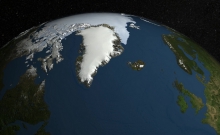
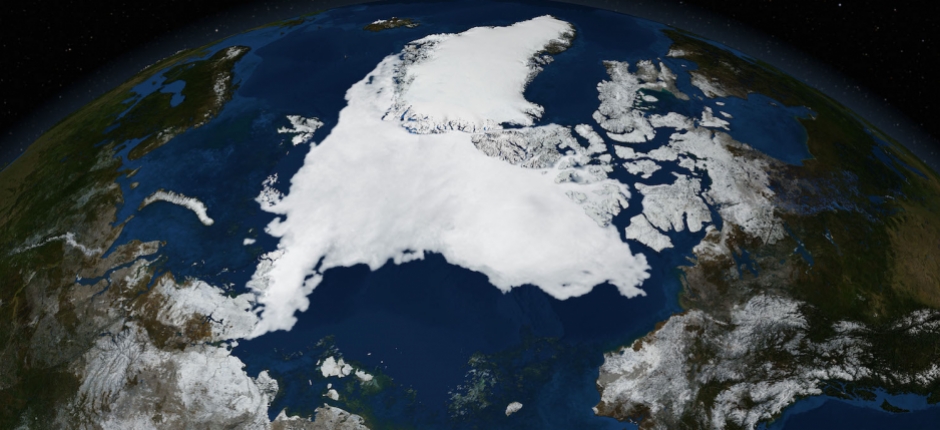
At a time of expanding interest in the region, defining what is – and what is not – Arctic, has taken on new importance. A straightforward explanation of what is Arctic is all the geographical area above 66° 33’ N latitude (also known as the Arctic Circle, and the southernmost extent of midnight sun and polar night). Others define the Arctic based on temperature (the region where average temperature in the warmest month of the year does not exceed 10°C.) The line formed by this definition is is also generally the northern treeline.
SEE VIDEO: How the world might look if the Inuit were in charge (at end of article)
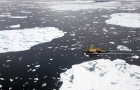
Used most loosely, ‘Arctic’ is synonymous with the northern polar region, and is associated with desolation, cold and emptiness. What these conceptions may not consider is that the Arctic is home to four million people in eight countries.
It is also home to an estimated 25,000 polar bears and zero penguins.
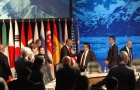
Each of the Arctic countries (all of which have territory that reaches bellow the Arctic Circle) are members of the Arctic Council, an intergovernmental forum.
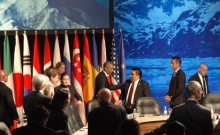
In addition to including six indigenous communities (the Aleut International Association, Arctic Athabaskan Council, Gwich'in Council International, Inuit Circumpolar Council, Russian Association of Indigenous Peoples of the North and the Saami Council) as ‘permanent participants’, the Arctic Council has also admitted 12 observers. More are interested in joining.
SEE RELATED: Who is an Arctic stakeholder today?
While firms are pursing minerals, oil, fishing, shipping routes and other economic opportunities, other outside groups, such as Greenpeace, a conservancy, are taking an interest in the region, primarily in order to protect it in the same way that Antarctica is protected. This might prove challenging: not only is the Arctic less clearly defined than Antarctica, no one single country controls the entire the Arctic, although parts of the Arctic Ocean are international waters.
While popular perception has it that the Arctic is simply ice cap, tundra or sea ice, it, in fact, has major seasonal changes and the climatic conditions vary widely. While the interior of Canada and Siberia are quite dry and cold, the climate in Scandinavia at the same latitude is far warmer and humid: not your standard vision of the North.
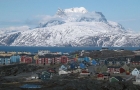
Equally varied is the level of human development. Scandinavia stands out for having communities where the living standard is on par with southern communities. In Alaska and Canada, there is little infrastructure to connect settlements with the outside world, while local development also tends to lag behind the south.
While the term ‘Arctic’ is perhaps the only word big enough that can encompass the northern polar region, dig a little beneath the surface and you’ll find that it, in fact, means different things for different Arctics.
Qallunaat! Why White People Are Funny by Mark Sandiford, National Film Board of Canada