US missing the boat on the Arctic
iAbout Press releases
As part of our continuing efforts to bring you as much information about our region as possible we offer readers a press release service that allows private firms, public agencies, non-governmental organisations and other groups to submit relevant press releases on our website.
All press releases in this section are published in their full length and have not been edited.
If you have a press release or other announcement you would like to have published, please send it to [email protected].
We reserve the right to reject press releases we deem irrelevant or inappropriate.
All material submitted to The Arctic Journal, including pictures and videos, will be assumed to be available for publication by The Arctic Journal and its related entities.
As the Arctic becomes increasingly attractive for mining and shipping companies, the international race to split up the region's wealth is heating up. Russia, headed by president Vladimir Putin, is taking a lead role, while countries from outside the region, including China and South Korea, are also taking more than a passing interest.
The US, though, is on the verge of losing out because it hasn't signed a United Nations treaty governing the area.
Under the United Nations Convention on the Law of the Sea, a state can claim resources beyond a 200-mile limit if a direct continuous continental shelf can be established. The treaty also codifies a whole host of maritime laws and customs which could help smooth tensions simmering in the Arctic as the land and sea grab explodes.
SEE RELATED: Blighty wants its slice of the Arctic pie
Key US senators announced this summer they would not support ratifying the Law of the Sea Treaty. The rejection means that there most likely won't be enough votes to ratify the agreement that 161 other states have signed.
The agreement has allowed four of the five Arctic maritime countries – Russia, Canada, Denmark and Norway – to lay claim to much of the central Arctic Ocean.
Afraid of the UN
Opposition to the treaty in the US has come mostly from Republican senators, afraid of giving away too much control to the UN.
“No international organisation owns the seas,” said Rob Portman, a Republican. “We simply are not persuaded this treaty will be more favourable to US interests than bilateral negotiations, voluntary arbitration, and other traditional means of resolving maritime issues.”
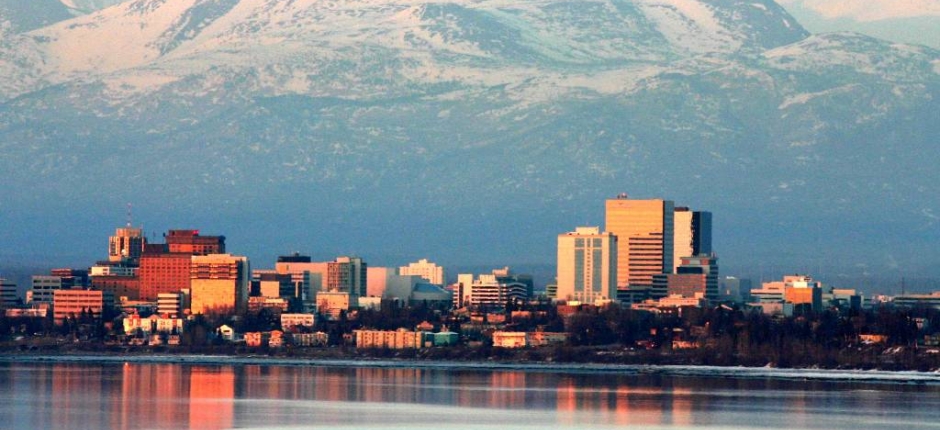
Although most US oil and gas reserves in the Arctic fall within 200 miles of Alaska’s coast, there are plenty of other ways the US stands to lose by not ratifying the treaty.
Olafur Grimsson, the president of Iceland, has been openly frustrated at the US's lack of engagement in the Arctic.
Grimsson said that both the Chinese and the Russians are way ahead of the US and moving to secure deals in the other Arctic nations, including his own.
"It will take a long time and great effort for the US to become as active is China is now in the Arctic," he recently told a meeting of the Arctic Council. "To be as active as Russia will take even longer, and I don’t know how to move Washington further on this issue.”