The heat is on
iAbout Press releases
As part of our continuing efforts to bring you as much information about our region as possible we offer readers a press release service that allows private firms, public agencies, non-governmental organisations and other groups to submit relevant press releases on our website.
All press releases in this section are published in their full length and have not been edited.
If you have a press release or other announcement you would like to have published, please send it to [email protected].
We reserve the right to reject press releases we deem irrelevant or inappropriate.
All material submitted to The Arctic Journal, including pictures and videos, will be assumed to be available for publication by The Arctic Journal and its related entities.
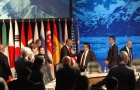
There is no doubt that the United States government has lit a fire under efforts to more meaningfully address climate change, both inside and outside the Arctic. This week’s meeting in Alaska is a further example; President Barack Obama and Secretary of State John Kerry are inviting ministers from around the Arctic and beyond to the Arctic to ensure they can see first-hand the reality of climate change impacts throughout the region.
Undermined by thawing permafrost, lashed by waves that are not calmed by a covering of sea ice and buffeted by increasing numbers of storms, whole villages in Alaska are sliding into the sea. People who live in those villages and others are also coping with the stress of the loss of traditional food sources. According to media reports, some villages are reporting drops of up to 90% over the past three years in the harvest of marine mammals that provide them with food.
WWF is hoping that the ministers’ personal interactions with the changing Arctic will move some of world’s biggest emitters to take the actions necessary at the coming Paris climate meeting. These leaders know the eyes of the world are on them, and they know this is a critical time for global climate action.
SEE RELATED: GLACIER and the American agenda
Doing so will require global emissions to peak well within this decade, and rapidly decline thereafter. By 2050, carbon-based fossil fuels must be effectively gone from the global energy equation. The challenge facing global leaders is not just to accomplish those goals, but to do so in a fair and equitable fashion, so that the poorest and most vulnerable people in the world are not unfairly burdened with the costs of change, or the impacts of change.
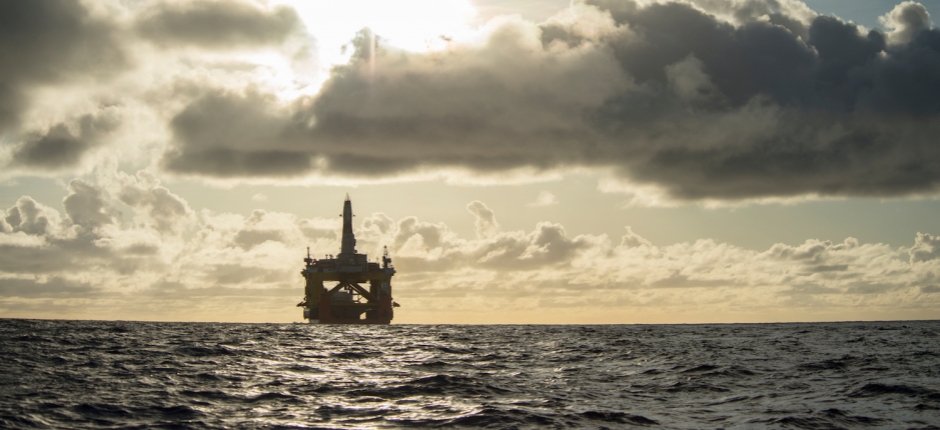
While the US government has taken significant steps to reduce emissions and prepare communities for the impacts of climate change, the ‘walrus in the room’ is its continued approval of drilling for oil in parts of the Alaskan offshore. The US has rightly set aside some of the most ecologically and economically important areas from oil and gas exploration, including certain areas of the Beaufort and Chukchi Seas and Bristol Bay, America’s fish-basket.
However, its decision to allow Royal Dutch Shell to drill offshore in the Chukchi Sea is simply too great a risk to Arctic waters and the communities they support. Even if we leave aside the irony of allowing a highly carbon-intensive search in the Arctic for yet more carbon to drive Arctic climate change, there is the matter of the potentially devastating local impacts. The government’s own risk assessment concludes that there is a 75% chance of a major spill during the lifetime of the lease.
SEE RELATED: The spill that launched a single ship
If a spill occurs in icy Arctic waters, there is a no proven effective method of cleaning it up. We lack the demonstrated ability to respond to and effectively contain or clean up major oil spills in the Arctic, and we lack a strong scientific understanding of key species and the ecosystem as a whole. A very few parts of the Arctic have been placed off limits to drilling, but this has not been done in the context of what areas it is necessary to protect as part of a circumpolar network of marine protected areas .
The Arctic is a special place with unique ecological and cultural values which are put at serious risk by the expanding industrialisation in the offshore environment. Until or unless a risk assessment can show there is virtually no risk to this environment, and that the places essential for Arctic life are protected, is it worth the risk, especially in the context of an urgent need to transition towards a 100% renewable future? WWF does not think so, and our hope is that the ministers assembled this week agree.
The author is the director of the WWF Global Arctic Programme.