A disaster by any other name
iAbout Press releases
As part of our continuing efforts to bring you as much information about our region as possible we offer readers a press release service that allows private firms, public agencies, non-governmental organisations and other groups to submit relevant press releases on our website.
All press releases in this section are published in their full length and have not been edited.
If you have a press release or other announcement you would like to have published, please send it to [email protected].
We reserve the right to reject press releases we deem irrelevant or inappropriate.
All material submitted to The Arctic Journal, including pictures and videos, will be assumed to be available for publication by The Arctic Journal and its related entities.
We don’t have to look very far back in history to find proof of why offshore oil drilling is a dangerous endeavour. The BP oil blowout and the Exxon-Valdez spill both left surrounding regions devastated and neither company was able to clean up their mess. But oil disasters come in many forms, not just spills. All stages of the fossil fuel lifecycle from beginning to end – exploration, drilling, transportation, and consumption – each have their own dangers, risks, financial and environmental costs. A new independent report commissioned by Greenpeace has for the first time gathered existing scientific data about the harms of seismic blasting – an oil exploration mechanism – on Arctic marine life. The findings are alarming.
1. Hearing loss
Seismic blasts are loud. Up to and sometimes over 260 decibels below the surface, which is 8 times louder than a jet engine heard 50m away on land. Sounds at this level can burst human eardrums, but whales are much more sensitive to sounds than we are. Seismic blasts under water can cause whales to experience temporary or permanent hearing loss, which impacts nearly every aspect of a whale’s daily activities – navigating, communicating, searching for food – since they rely on echolocation.
2. ‘Freeze and sink’ response
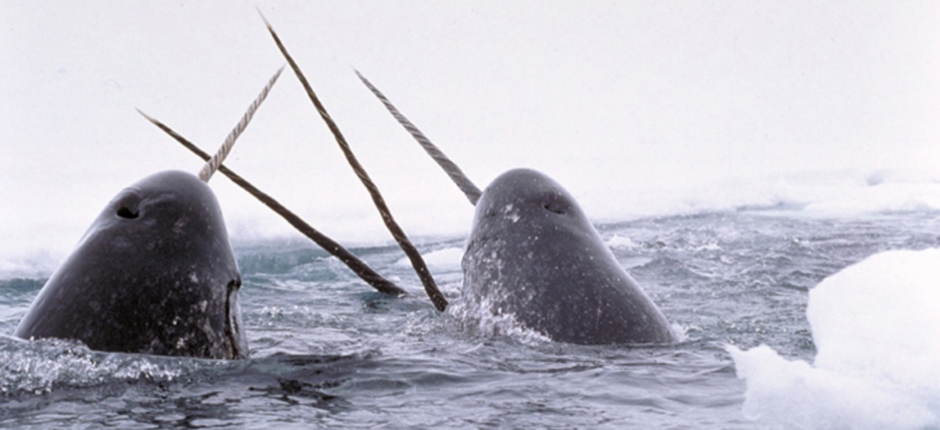
Narwhals are perhaps the most susceptible to damages from seismic blasting because they are unlikely to flee an area when faced with a threat. Instead, they have been observed to respond to loud noise by freezing and sinking, which would mean the whales stay near the source of a seismic blast during oil exploration and suffer from additional impacts of the noise such as hearing damage and additional stress.
3. Ice entrapment
Scientists are concerned about the possibility that three recent ice entrapments of narwhale were linked to seismic noise. In these incidents, it is suspected that narwhale migration was disrupted by noise from nearby seismic blasting. The whales delayed their migration to a later date when ice was reforming which resulted in thousands of narwhale becoming entrapped in the winter sea ice causing them to die.
SEE VIDEO: ‘Blasting the Arctic’ (at end of article)
4. Stopping whale songs
Whale songs are known for their beauty and mystique. They are also an essential way for whales to communicate with each other. Scientific documentation shows that whales are known to significantly reduce or even stop singing altogether when seismic blasts occur. While some whales may resume singing within hours after the noise ends, others can take days to recover.
5. Stress
Stress hormones in whales can increase in response to seismic noise. Seismic airguns caused a significant mean increase in norepinephrine, epinephrine, and dopamine levels immediately after a high level of exposure in a captive beluga whale. All three of these stress hormones increase significantly with increased noise levels and can remain high even an hour after noise exposure. Stress effects or physiological changes, if chronic, can inhibit the immune system or otherwise compromise the health of animals.
Don’t worry, there is some good news. The independent scientists who wrote this report have come up with some strong recommendations to caution against seismic blasting, including avoiding sensitive areas like the Arctic and using the precautionary principle until further data and improved technologies are developed.
“It is alarming to consider the vast amount of seismic activity being planned and conducted in the High Arctic, given the fragile nature of the ecosystem and the potential for disturbance and harm to whales. It seems justified to urge for extreme caution given both the lack of data and the limited understanding of the short and long term impact of seismic noise on sensitive Arctic species, especially the narwhal,” says Dr Oliver Boisseau, the senior research scientist with Marine Conservation Research
To learn more about a project, we just launched, while Greenpeace ship Arctic Sunrise is on its way to document seismic blasting taking place in north-eastern Greenland, visit this site.
The author is an Arctic campaigner for Greenpeace Canada.