Not black and white
iAbout Press releases
As part of our continuing efforts to bring you as much information about our region as possible we offer readers a press release service that allows private firms, public agencies, non-governmental organisations and other groups to submit relevant press releases on our website.
All press releases in this section are published in their full length and have not been edited.
If you have a press release or other announcement you would like to have published, please send it to [email protected].
We reserve the right to reject press releases we deem irrelevant or inappropriate.
All material submitted to The Arctic Journal, including pictures and videos, will be assumed to be available for publication by The Arctic Journal and its related entities.
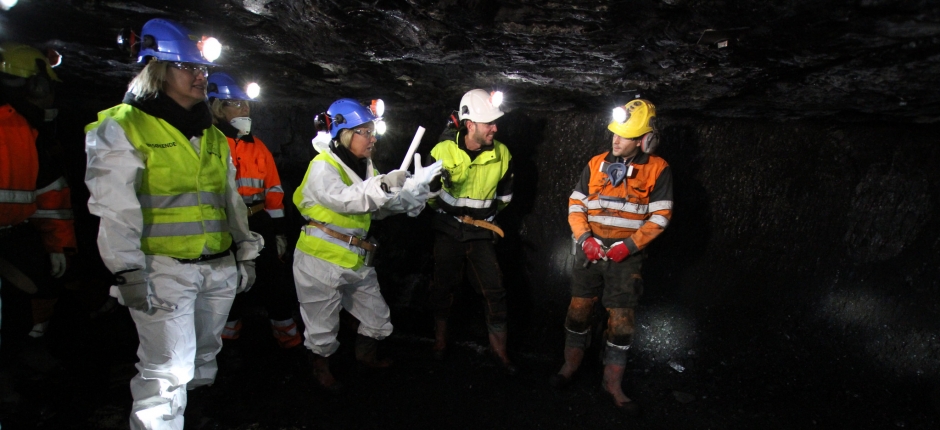
Earlier this year, when Norway’s government bailed out Store Norske Spitsbergen Kullkompani, a state-owned coal-mining firm, many were left trying to understand why.
Store Norske has been digging for coal in Svalbard since the company was established in 1916, and historically it has been a cornerstone for Norwegian activity in the territory. In the last couple of years, however, Store Norske has struggled, as coal prices fell and its debts mounted after a number of investments failed.
So far, the down-turn has resulted in 95 employees losing their jobs last December. The 500 million kroner ($60 million) plan, issued in the form of a loan and a substantial state investment in property held by the company in Svalbard, was intented to prevent more jobs from being lost.
But with coal falling out of favour as an energy source, many in the territory are calling instead for ways to diversify the local economy, not prop up mining.
Another thing was the timing: Oslo’s decision to support continued mining in Svalbard came around the same time parliament implemented new guidelines for the Norwegian Government Pension Fund, the sovereign wealth fund that invests Norway’s oil income, requiring it to withdraw investments from several coal-mining companies globally.
SEE RELATED: The biggest little city in the Arctic
Critics attacked the decision for a variety of reasons. Environmental groups, for example, point out the double-standard Oslo is setting by condemning coal-mining abroad, but supporting it at home. Others, some of them from within the government, were upset that money was being used to support coal-mining at a time when other countries are increasingly turning to cleaner energy sources.
The government, for its part, argued that if Store Norske were to file for bankruptcy it would have been harmful to the process of diversifying Svalbard’s economy. Keeping the company alive would give it the time it needed to reinvent itself and to make use of its expertise operating in the Arctic.
It has also been hinted that Store Norske is strategically important for maintaining Norwegian activity in Svalbard, and thus sovereignty over the territory. The Svalbard Treaty, from 1920, makes it clear that Norway controls the island group. However, it also stipulates that Svalbard is a demilitarised zone and that all signatories may engage in economic activity there. The most notable example of this is Barentsburg, a Russian mining town situated some 40 kilometres from Longyearbyen, the capital.
SEE RELATED: When Dmitry Rogozin speaks, people worry
Monica Mæland, the trade and industry minister (pictured above), appearing on NKR, a public broadcaster, in April explained that securing Store Norske’s survival prevented its properties from being sold off to foreign investors.
“We know that the interest for the Arctic and Svalbard is bigger than it’s ever been,” she said at the time. “And we know that the security situation has changed, and this is the right way to go. We think that it is important that the Norwegian nation maintains access to these key strategic areas.”
For now, anyway, it appears Norway will be digging its way to sovereignty.