July sea ice declines rapidly, but avoids record low
iAbout Press releases
As part of our continuing efforts to bring you as much information about our region as possible we offer readers a press release service that allows private firms, public agencies, non-governmental organisations and other groups to submit relevant press releases on our website.
All press releases in this section are published in their full length and have not been edited.
If you have a press release or other announcement you would like to have published, please send it to [email protected].
We reserve the right to reject press releases we deem irrelevant or inappropriate.
All material submitted to The Arctic Journal, including pictures and videos, will be assumed to be available for publication by The Arctic Journal and its related entities.
Don’t tell it to folks living in northern Canada, but sea-ice in July melted at a “pronounced” rate, narrowly missing setting an all-time low for the month, according to the monthly report from the National Snow and Ice Data Center, a Colorado-based research institute.
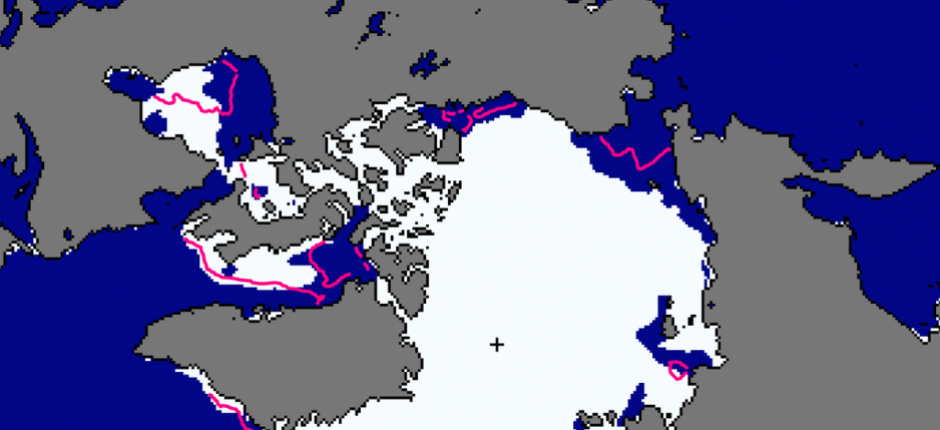
July is typically the month in which sea ice extent retreats most during the summer melt. While that remained true throughout much of the Arctic, Canada’s North, including the city of Iqaluit and the Northwest Passage, were socked in by ice July. The situation meant that many waterways were not navigable, delaying the arrival of supply ships and postponing other maritime activities.
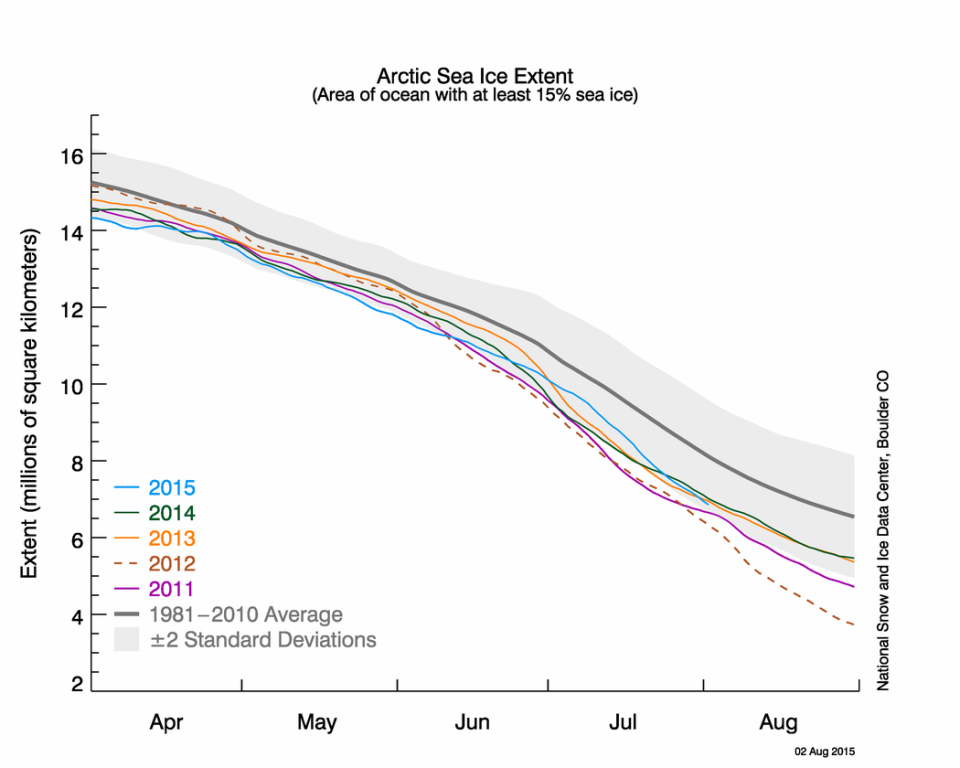
The persistent ice in Baffin and Hudson bays, and in the Northwest Passage, stands in contrast to the sharp decline in sea ice recorded elsewhere in the Arctic. After an average rate of retreat in June, which was the third lowest loss for that month on record, the rate of ice loss in July was 15% greater than the 1981-2010 average.
SEE charts below
NDSIC estimates that the situation in the Canadian waterways added some 500,000 square kilometres of sea ice in July. That pushed last month’s extent about 550,000 square kilometres above than 2012 record-low. So far this year, the extent of ice loss remains comparable with the 2013 and 2014 rates.
In contrast to Canadian waterways, ice levels in the Kara, Barents, Chukchi, East Siberian and Laptev seas were all below average. Ice extent was near average in the Beaufort Sea and the East Greenland Sea, according to NDSIC.
One of the reasons for the rapid loss, the NSDIC says, is higher temperatures over the Arctic Ocean.
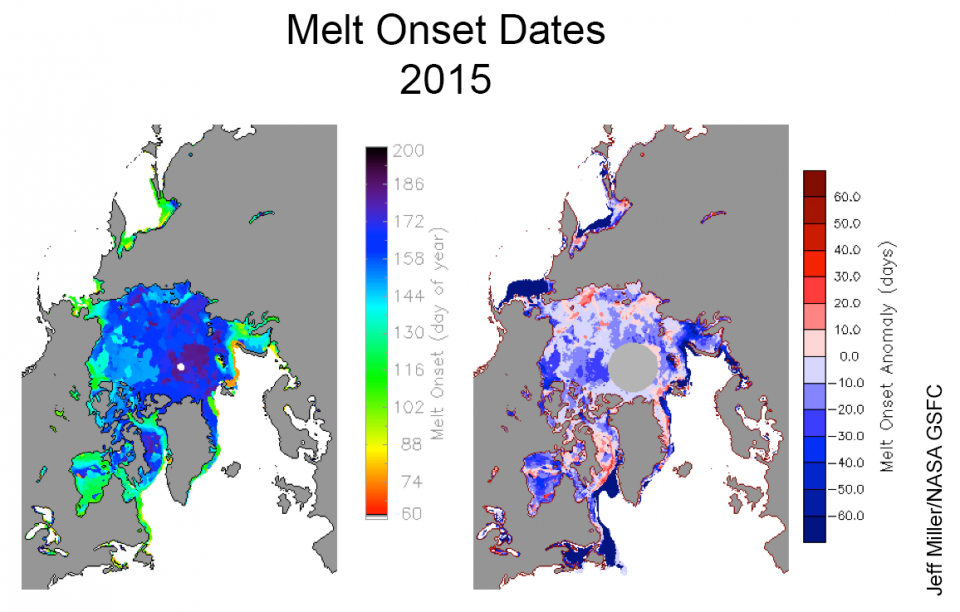
NSIDC also explains that the difference in extent is due partly to the onset of the summer melt. The annual retreat began a month earlier than average in the Kara Sea, where there is less ice than normal, and in the southern Beaufort Sea, where ice is more broken up.
SEE RELATED: Third-lowest May sea-ice extent
On the other hand, Baffin Bay saw the summer melt season began later than normal. Melting, according to the NSIDC, also started later than average in parts of the East Siberian and Laptev seas, where ice extent is greater than in recent years.
July’s average ice extent was 8.77 million square kilometres, making it the eighth lowest July extent since satellite record-keeping began in 1979. The July figure is 920,000 square kilometres below the 1981-2010 average for the month.