Native groups: not in our ANWR
iAbout Press releases
As part of our continuing efforts to bring you as much information about our region as possible we offer readers a press release service that allows private firms, public agencies, non-governmental organisations and other groups to submit relevant press releases on our website.
All press releases in this section are published in their full length and have not been edited.
If you have a press release or other announcement you would like to have published, please send it to [email protected].
We reserve the right to reject press releases we deem irrelevant or inappropriate.
All material submitted to The Arctic Journal, including pictures and videos, will be assumed to be available for publication by The Arctic Journal and its related entities.
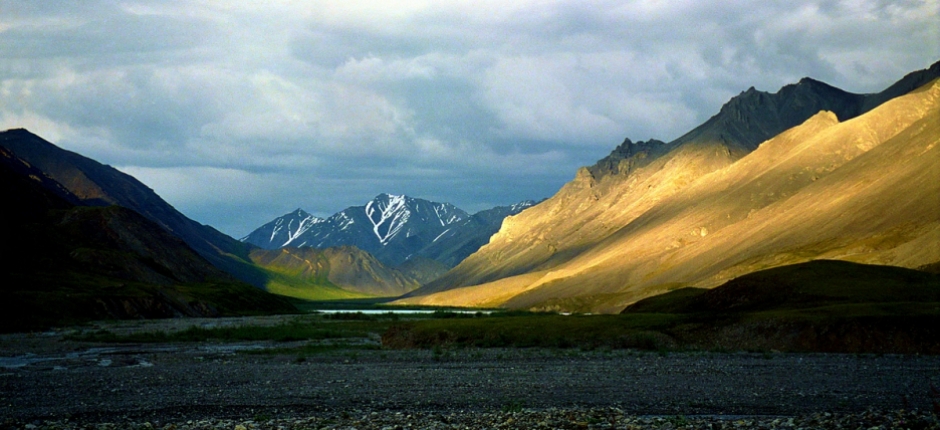
Alaska native groups with cultural ties to the Arctic National Wildlife Refuge are welcoming a proposal unveiled on Sunday by the White House to put two-thirds of the area’s 80,000 square km permanently off limits to oil exploration.
Native and conservation groups say the decision by the Obama Administration to declare the refuge, including its oil-rich Arctic coast, a wilderness, the highest level of protection that can be afforded federal lands, serves as an important recognition of its value.
In addition to providing a habitat for a number of animals, the ANWR is also considered an important cultural area for the Gwich’in and Inupiat, two native groups, who call it ‘the sacred place where life begins’. A move to protect it was “great news”, said Sarah James, the chair of Gwich’in Steering Committee.
“Oil development there would hurt the caribou and threaten the Gwich’in way of life,” she said.
SEE RELATED: An Alaska-size pot of gold
Despite the local support for the measure, Alaska lawmakers in both Washington and Juneau immediately denounced the White House’s plan as an “attack” on the state’s sovereignty.
“It’s clear this administration does not care about us, and sees us as nothing but a territory,” Lisa Murkowski, a powerful senator, said in a statement.
Murkowski recently took over as chair of the Senate’s Energy and Natural Resources Committee, and with a Republican majority in Congress, and it was expected she would use the position to seek to open ANWR to exploration.
That can still happen, but it will be made more difficult by Sunday’s announcement and a series of further announcements, expected later this week, that will impact Alaska’s oil and gas industry, by far the state’s largest source of income.
SEE RELATED: Alaska oil fuelling US political feud
In the past, supporters of drilling in ANWR argued its oil would help wean America off foreign oil. However, the administration’s plans come amid surging production of domestic oil and gas, primarily from fracking, and a decreasing reliance on Alaskan oil.
“We’re not running out of oil, so that argument doesn’t hold anymore,” said Robert Thompson, the head of REDOIL, a native group opposing drilling on native lands.
Opponents of the efforts to put ANWR off limits to drilling argue that doing so would mean subjecting more state territory to federal control. That thought irks some Alaskans, who already feel too much of the state is controlled by Washington.
“Alaska already contains more than half of all land in America protected under wilderness status,” Murkowski said. “Alaska will give no more.”
Thompson, who lives in Kaktovik, a town of 250 located in ANWR, supported doing so as a means to keep the ANWR ecosystem intact, however.
“Other states have lost parts of their natural ecosystems.” he said. “Ours is still there. This will keep it there, and it will allow people with subsistence rights to keep hunting there. If they open ANWR, where will they go?”
Just like state lawmakers accuse outsiders from Washington of trying to impose policy on the state, Thompson said decision-makers in Juneau, over 1,000km away from Kaktovik, were seeking to the same.
“They don’t want what people here want. We don’t want to live in an oil field and we’re happy the president in Washington can prevent that from happening."