Forced marriage
iAbout Press releases
As part of our continuing efforts to bring you as much information about our region as possible we offer readers a press release service that allows private firms, public agencies, non-governmental organisations and other groups to submit relevant press releases on our website.
All press releases in this section are published in their full length and have not been edited.
If you have a press release or other announcement you would like to have published, please send it to [email protected].
We reserve the right to reject press releases we deem irrelevant or inappropriate.
All material submitted to The Arctic Journal, including pictures and videos, will be assumed to be available for publication by The Arctic Journal and its related entities.
Nearly a year after visiting Alaska, Barack Obama will meet with science ministers from 25 countries on September 28 to discuss how to strengthen science and research co-operation in the Arctic.
The goal of the Arctic Science Ministerial is to get countries with significant research interests in the region to commit to more collaboration, as well as to agree to commitments that will last well after the next president takes office.
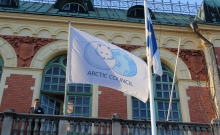
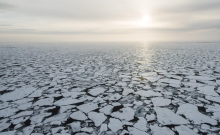
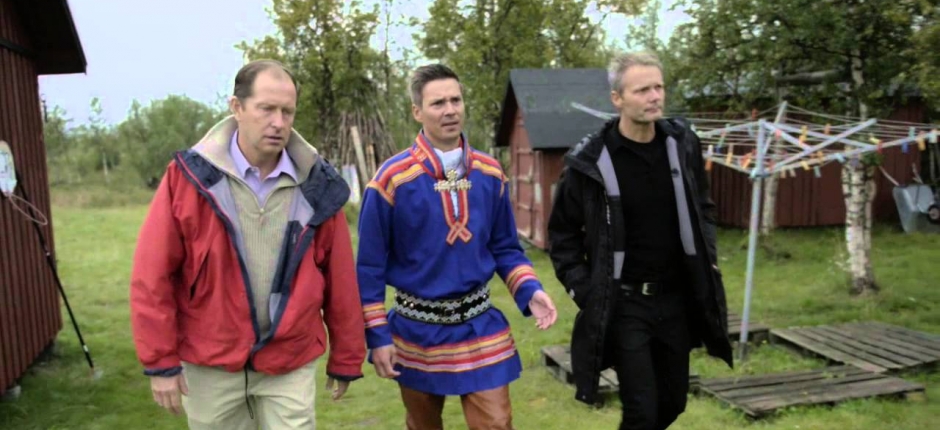
“The Arctic is warming faster than anywhere else on earth. This has profound consequences not only in the North. We have underestimated the acceleration of these changes. They will impact not only the region, but every person on Earth. That is why we are having this meeting,” says Mark Brzezinski (pictured above, in red coat), a former US ambassador to Sweden.
SEE VIDEO: Briefing on White House Arctic Executive Steering Committee (at end of article)
Now the head of the White House’s Arctic Executive Steering Committee, a position created in 2015, Mr Brzezinski has had responsibility for planning the event. It has been a very busy few weeks.
“I have never ever worked as hard as this. This is like planning 20 weddings simultaneously,” he laughs.
Like last year’s Glacier meeting, the event on Wednesday is not an Arctic Council event, though there is significant overlap between the organisation’s membership and the list of invitees.
The summit will be attended by high-level representatives from the eight Arctic Council member states, and from observer countries like China, India, UK, France, Germany, Japan and Italy. The European Commission will participate, as will a number of indigenous leaders, with whom the White House has had a series of consultations over the past few months.
“Participation is based on how active the countries’ Arctic research programs are,” Mr Brzezinski says. “We are looking for government-to-government alignments in order to advance Arctic research collectively. We need a more detailed and nuanced understanding of what’s happening and what to expect in the future, and we need to better understand how to incorporate indigenous knowledge in order to improve our collective research.”
SEE RELATED: The American agenda
To do that, the White House has identified four themes for the meeting:
1) Understanding Arctic science challenges and their regional and global implications
2) Strengthening and integrating Arctic observations and data sharing
3) Applying expanded scientific understanding of the Arctic to build regional resilience and shape global responses
4) Using Arctic science as a vehicle for science, technology, engineering and math (Stem) education and citizen empowerment
“These are areas where all nations have a stake,” Mr Brzezinski says. “Fortunately we see rapidly emerging technology which provides us with new data and insights. This gives us new opportunities to co-operate. But time is not on our side. We have to rush to observe a system that is changing faster than ever before. We need to look at what is most urgent, and the consequences of inaction.”
Wedding comparisons notwithstanding, Mr Brzezinski does not expect the mood at the White House on Wednesday to be one of celebration.
“This is a meeting of necessity and urgency. We owe it to future generations to rise to this challenge.”
This article was originally published by High North News. It is republished here as part of a collaboration with The Arctic Journal.