Annual sea-ice maximum comes early, sets record low
iAbout Press releases
As part of our continuing efforts to bring you as much information about our region as possible we offer readers a press release service that allows private firms, public agencies, non-governmental organisations and other groups to submit relevant press releases on our website.
All press releases in this section are published in their full length and have not been edited.
If you have a press release or other announcement you would like to have published, please send it to [email protected].
We reserve the right to reject press releases we deem irrelevant or inappropriate.
All material submitted to The Arctic Journal, including pictures and videos, will be assumed to be available for publication by The Arctic Journal and its related entities.
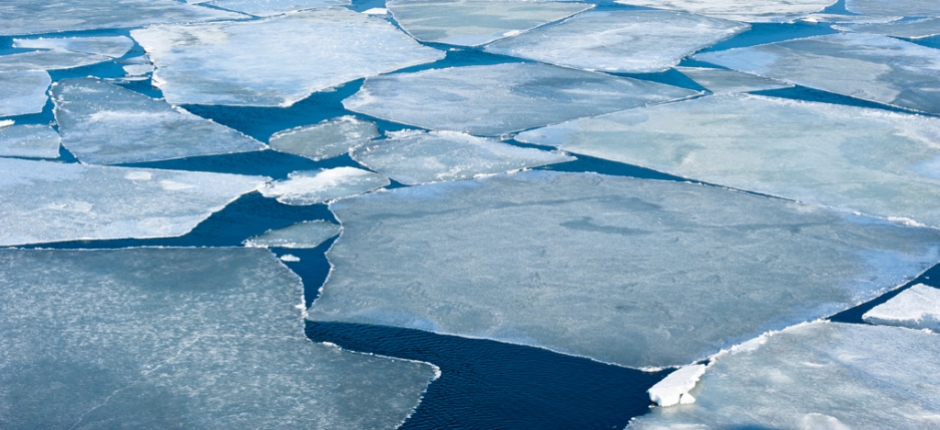
After registering substantially less growth than normal over the 2014-2015 winter season, the annual sea-ice maximum appears to have hit is lowest extent ever, the National Snow and Ice Data Center, a Colorado-based research institute that is partly funded by Nasa, reports.
Earlier this month, the NSIDC forecasted that this year’s maximum extent – the at which sea ice begins its annual melting season, which normally ends in September – was likely to occur in the second or third week of March, and that it would challenge the 2011 figure for the lowest on record since 1979, when satellite measurements began.
While the NSIDC was on the mark on the extent prediction, the date the minimum was reached was February 25, nearly a month early, and one of the earliest days on record. It was a full 15 days earlier than the 1981-2010 average of March 12.
Ted Scambos, the NSIDC’s senior research scientist, told The Guardian, a British newspaper, that the date was “very early but not unprecedented”.
SEE RELATED: Ice in the machinery
The earliest date of maximum extent ever recorded came in 1996, when ice began receding on February 24. The latest-ever annual maximum was reached on April 2, 2010.
NSIDC calculates daily ice extent as an average of the previous five days. When seeking to identify the seasonal maximum, it looks for a clear downward trend for a number of days.
A late-season rebound is possible, the NSIDC said, noting that it had observed a rapid decline prior to February 25, but that after that date the trend had slowed. Any growth experienced during March is unlikely to push the extent past the February 25 level, however.
If the figure holds, this year’s maximum extent will have been 1.10 million square km below the 1981-2010 average, and 130,000 square km below the previous record low, in 2011.
SEE RELATED: When MABEL met ATLAS
Ice levels this year are below average in all parts of the Arctic Ocean, except the Labrador Sea and Davis Strait.
Walter Meier, an NSIDC scientist, said in statement that since the monthly sea-ice measurement looked at conditions over an extended period, potential effects due to weather were removed.
The NSIDC says it uses early season ice data to get an idea of how the summer melt season will be. However, neither an earlier-than-normal on-set of the melt season nor a record-low extent are necessarily a sign that a new summer low will be set.
Although scientists do look at the date the maximum occurs and how quickly ice-levels decline, a more important factor is the amount of thick, multi-year ice that can be expected to survive the summer melting season.