Shippers: plenty of potential for polar route
iAbout Press releases
As part of our continuing efforts to bring you as much information about our region as possible we offer readers a press release service that allows private firms, public agencies, non-governmental organisations and other groups to submit relevant press releases on our website.
All press releases in this section are published in their full length and have not been edited.
If you have a press release or other announcement you would like to have published, please send it to [email protected].
We reserve the right to reject press releases we deem irrelevant or inappropriate.
All material submitted to The Arctic Journal, including pictures and videos, will be assumed to be available for publication by The Arctic Journal and its related entities.
An Arctic Sea route open eight months of the year and transporting 50 billion tonnes of cargo is a possibility within the near future, shipping representatives told an audience at the Arctic Circle conference in Reykjavik today.
But even though the Arctic is currently open for traffic two months a year, that does not mean profits there lie over the horizon.
“If we ship 5 billion tonnes of cargo next year, we’ll be rich,” Dimitry Pourim, the chairman of Russian shipper Sovfracht, said.
With decreasing ice levels in the Arctic, interest in the Northern Sea Route, which shaves as much as 40 percent of the travel time off ocean-going travel between Asia and Europe, has mushroomed. In 2009, there were just two ships to complete the voyage. By 2012, there were 270.
Safety still an issue
But, with the growing interest shippers also agreed came a need for proper regulation.
Russian authorities, according to Mikhail Slipenchuk, a member of that country’s legislature, said 668 permits were issued to ships seeking travel through its waters this year. Only 70 were rejected.
“The [Northern Sea Route] is profitable shipping option, but much investment is needed – and that includes environmental protection,” Slipenchuk said.
SEE RELATED: Container ship’s journey highlights prospect, challenges of Arctic routes
His concerns were echoed by Li Yunpeng, the head of COSCO Group, a Chinese shipping concern. He called for shippers to come up with a long-term strategy, while at the same time recommending against unrestrained exploitation of the Arctic.
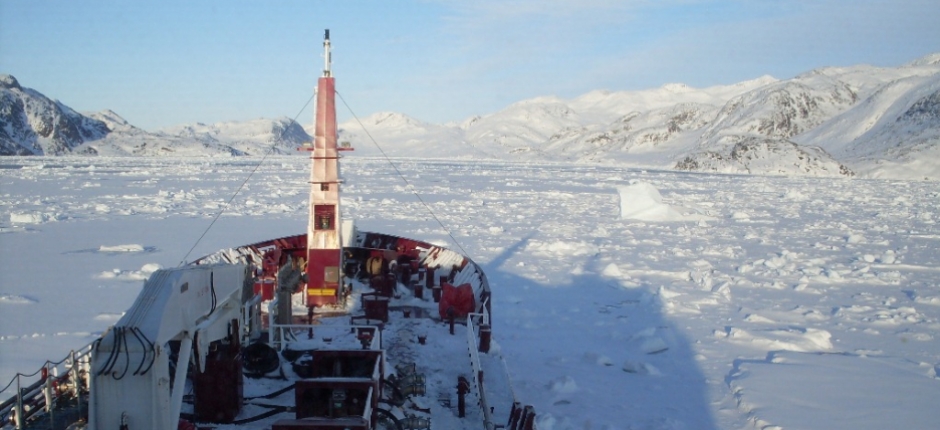
Concerns about the potential for an ice-related accident were underscored earlier this year, when the Nordvik, a Russian tanker rated to sail in light ice conditions, found itself lodged in ice in the Laptev Sea, en route to Murmansk. The Nordvik was carrying diesel, which had to be pumped over to another ship.
A Mediterranean for the future
But even with the potential for an accident in an area that makes response efforts difficult, shippers expect interest in Arctic shipping to continue unabated in the years to come.
Gylfi Sigfusson, the head of Emskip, predicted that first transfer shipping ports, where goods being sailed from Asia could be tranferred for further shipping to commercial markets in the West, would be set up in the Arctic “not in 25 years, but in 10 or 12”.
“The Northern Sea Route is shortcut between world's most productive regions,” Sigfusson said. “The Arctic Ocean is an industrial Mediterranean Sea for the future.”