Making it cheaper to move about their country
iAbout Press releases
As part of our continuing efforts to bring you as much information about our region as possible we offer readers a press release service that allows private firms, public agencies, non-governmental organisations and other groups to submit relevant press releases on our website.
All press releases in this section are published in their full length and have not been edited.
If you have a press release or other announcement you would like to have published, please send it to [email protected].
We reserve the right to reject press releases we deem irrelevant or inappropriate.
All material submitted to The Arctic Journal, including pictures and videos, will be assumed to be available for publication by The Arctic Journal and its related entities.
For the vast majority of people going to Greenland, the trip there starts off in a place they did not want to go.
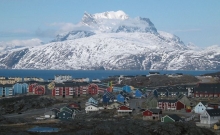
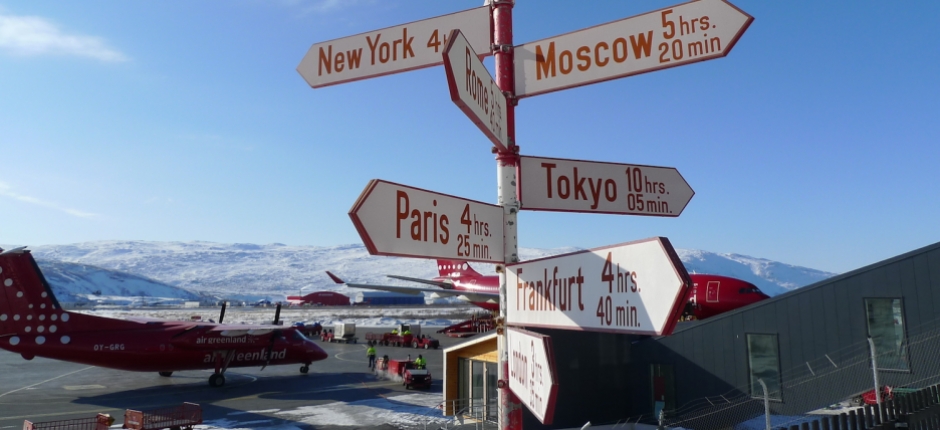
After landing in Kangerlussuaq Airport, some 40% of travellers continue on to Nuuk, the capital. While another 20% have Ilulissat, a tourist destination, as their final stop.
Only a fraction of travellers, primarily scientists and adventure seekers looking to cross the ice cap, remain in Kangerlussuaq, a settlement of about 500, where the primary international airport, and the hub for Air Greenland, the flag carrier, is located.
SEE RELATED: Death by departure
Changing this situation, so that travelling in Greenland requires fewer transfers, and is thus cheaper and less time consuming, has been a priority for successive governments. The latest plan, likely to be presented formally to Inatsisartut, the national assembly, this autumn, will involve extending runways in Nuuk and Ilulissat, to lengths of 1,799m, making them capable of receiving intercontinental traffic. Two other airports, one in southern Greenland and one in eastern Greenland, would also be selected for improvement, while other regional airports would be closed.
According to calculations by Self-Rule authorities, completing all four projects would cost 3.5 billion kroner ($520 million), and finding the money would require oustide investment. The plan, however, would reduce passenger costs by 30% by allowing airlines to fly larger aeroplanes from foreign airports, primarily in Iceland and Canada, directly to destinations in Greenland.
The changes would also be a significant step to move Greenland’s airport network away from the legacy left behind after the Second World War, when American forces built bases in strategic locations. Later, these bases became civilian airports even though they are placed well away from major settlements.
One of these is airports is Kangerlussuaq, whose 2,800m runway makes it only one of two airports in Greenland where intercontinental traffic can land. The other airport, in Narsaqsuaq, has an 1,800m runway, but is likewise located well away from the nearest town.
Under the current set-up, most travellers reach Greenland aboard Air Greenland’s Airbus A330, which has a capacity of 280. After traveling from Copenhagen to Kangerlussuaq, passengers transfer to commuter aeroplanes with capacities of around 75 passengers or, in some cases, to helicopters.
Air Greenland officials have come out in favour lengthening the Nuuk runway, but not at any cost. More important, according to the airline, is making sure that all passengers can still reliably get to their destinations.
One drawback to placing the main airport in the capital is the weather. Inclement weather affects traffic at the airport about 60 days a year. On the other hand, traffic at Kangerlussuaq, placed at the foot of a fjord, well inland from the Atlantic coast, is rarely affected by weather, and opponents of placing the primary airport in Nuuk say doing so would unfairly make the delays experienced by travellers using that airport the problem for almost all passengers.
SEE RELATED: Editor’s Briefing | When you can’t get there from here
Even with the extensions, Nuuk and Ilulissat would only be able to accommodate smaller jets, with a capacity of up to 150. The costs per passenger on those smaller jets would be higher, but most travellers would be able to reach their destination in Greenland without a domestic transfer. It is here, reckon Self-Rule officials, that there would be room to lower fares, and in turn, to attract more passengers.
According to official estimates, the lower prices would lead to passenger numbers to more than double by 2040. The hope is that those extra travellers can lead to the same type of tourism boom that has benefitted the Icelandic economy in recent years.
“Iceland is beautiful and getting there is cheap,” notes one Greenlandic official. “Greenland is beautiful but expensive. That must change.”