Canada, Greenland’s natural-born partner

iAbout Press releases
As part of our continuing efforts to bring you as much information about our region as possible we offer readers a press release service that allows private firms, public agencies, non-governmental organisations and other groups to submit relevant press releases on our website.
All press releases in this section are published in their full length and have not been edited.
If you have a press release or other announcement you would like to have published, please send it to [email protected].
We reserve the right to reject press releases we deem irrelevant or inappropriate.
All material submitted to The Arctic Journal, including pictures and videos, will be assumed to be available for publication by The Arctic Journal and its related entities.
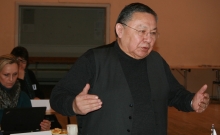
When André Giroux, Canada’s ambassador to the Kingdom of Denmark, is in Nuuk this week, he will have a particular message for the people of Greenland.
“There is no doubt that, for us, Greenland is a special partner,” he says. “Greenland is Canada’s second neighbour and that makes us a natural partner in its future development.”
The ethnic link between the Inuit populations of Greenland and Nunavut is perhaps the most obvious aspect of that special relationship. And it is thanks to the cultural and geographic proximity between the two populations that their respective governments in Copenhagen and Ottawa do regularly have the same line on a number of Northern issues, not least seal hunting (and dissatisfaction with the EU’s ban on seal imports).
SEE RELATED: Editor’s Briefing | The EU
Defence, search and rescue and management of wildlife species that don’t heed political borders are other areas where Greenland and its neighbour to the east find it easy to agree, but this is just the start, reckons Mr Giroux.
“In reality, the limits to our co-operation are in our minds. In my view there are no limits. The challenge to increased co-operation lies in our old habits. For example, we think north-south when we should be thinking north-north.”
Two other areas of potential collaboration, health and economic development, featured prominently in Canada’s recently concluded Arctic Council chairmanship, and Mr Giroux plans to use his time in Nuuk to explain how Greenland and other Arctic territories can benefit from its accomplishments.
Given similar problems with suicide and other social issues, mental wellness, he says, is an obvious area where Nunavut and Greenland can learn from each other.
SEE RELATED: Arctic states renew vow to help polar bears
However, first and foremost among Mr Giroux’s talking points is likely the Arctic Economic Council, a business forum. The economic development of the north was a major focus of the Canadian chairmanship. And now that the AEC has been established, promoting it remains a priority.
Much of the impetus for the AEC comes from Leona Aglukkaq, Canada’s environment minister, who served its chair of the Arctic Council. A strong advocate of private business in the development of Arctic communities, she intended the forum to be a way for businesses in Arctic countries to work closer together.
“This gives businesses a body where they can share ideas,” Mr Giroux says. “Its purpose is to facilitate Arctic-to-Arctic business. A lot of the traditional line of business activity was always north-south and south-north. This promotes north-north Arctic business.”
That is a message that will jibe well with the expectations of the audience when Mr Giroux speaks in connection with the fourth Future Greenland conference, a biennial event seeking to explore ways to stimulate the country’s economy.
SEE RELATED: Editor’s Briefing | Arctic Economic Council
As one of Greenland’s highest-profile business events, the two-day gathering, which starts on Wednesday, draws the attendance of the country’s leading political decision makers (the premier is expected to participate) and its top business leaders (the event is organised by the country’s largest business lobby).
Canadian firms, Mr Giroux makes clear, do see Greenland as an opportunity to capitalise on their experience, especially in areas like mining. That would, of course, spell profit for individual companies, but, he underscores, it also has the potential to improve the lives of ordinary people living in Greenland.
“At the end of the day, this is all about the people who live in the Arctic and their ability to pilot their own future and to influence and decide for themselves what they want.”
It is a message that will be particularly welcome.