It’s the transparency, stupid
iAbout Press releases
As part of our continuing efforts to bring you as much information about our region as possible we offer readers a press release service that allows private firms, public agencies, non-governmental organisations and other groups to submit relevant press releases on our website.
All press releases in this section are published in their full length and have not been edited.
If you have a press release or other announcement you would like to have published, please send it to [email protected].
We reserve the right to reject press releases we deem irrelevant or inappropriate.
All material submitted to The Arctic Journal, including pictures and videos, will be assumed to be available for publication by The Arctic Journal and its related entities.
Reports last week that Shenghe Resources, a Chinese mining firm, had been granted an option to purchase 60% of the Kvanefjeld rare-earth and uranium mine, in southern Greenland, grabbed their share of attention internationally. For some, the prospect of a Chinese firm taking over the project was downright worrying.
Such fears are baseless, regardless of whether we are talking about uranium, which China uses to feed its nuclear power plants, or rare earths, a resource on which China already holds a near monopoly. Any investment that can help our economy grow is welcome, especially given the dire straits the economy is expected to hit in the years to come.
Considering how much profit there is to be made from mining and how important these funds are if Greenland ever wants to be financially independent from Denmark it is important that we get our mining industry up and running as quickly as possible. Unfortunately, a lack of investors has made doing so a lot tougher than expected.
SEE RELATED: Don’t take our word for it
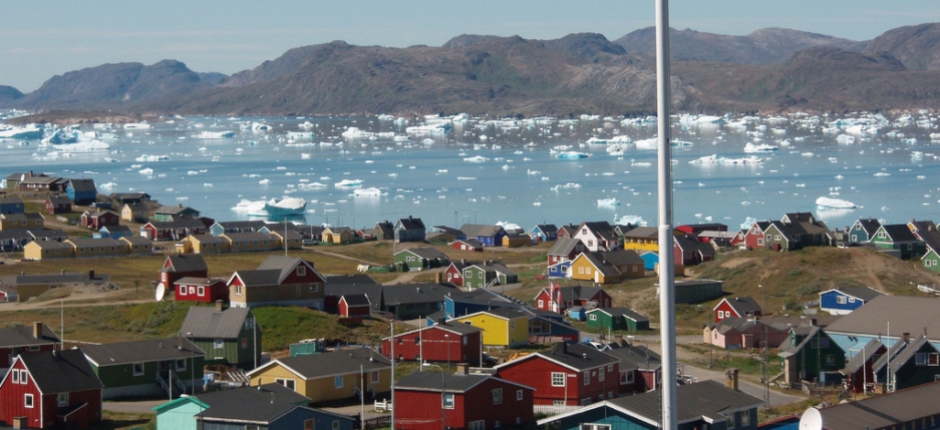
GME, which has been working since 2007 to develop Kvanefjeld, hasn’t made this process any easier for itself considering that the agreement will speed along its plans to begin operations at a mine that lies within sight of a prosperous town.
The option to purchase a majority of GME’s shares – offered to a company that is already one of the world’s leading miners of rare earths – was a part of Shenghe’s agreement to buy a 12.5% stake in the firm. The option was revealed in Shenghe’s official announcement about the purchase. GME’s own announcement to the market in Sydney, on the other hand, said nothing about it. Odd, that. The agreement gives Shenghe the right to buy 60% of GME, so long as Greenlandic authorities give it the green light. One would have thought that the two companies would have better co-ordinated their information about an agreement of that magnitude.
The Mining Ministry is now looking into the agreement to determine whether it brings up any security or foreign policy issues. The international community has criticised China for its near monopoly on rare earths, which are used in mobile phones, wind turbines and all sorts of other types of high-tech equipment. A number of mines that could chip away at the monopoly are on the verge of beginning operations, but they lack financing.
SEE RELATED: ‘Malmbjerg disease’ stalks Greenlandic mining
When it comes to uranium, Chinese firms are already involved in projects in Australia and Canada. It is hard to imagine that the Danish government, which is responsible for Greenland’s foreign and security policy, would object to Shenghe’s stock option. They would be hypocritical if they did: even Denmark is trying to attract Chinese investments that can stimulate growth, to the benefit of its people. The US, meanwhile, is for all intents and purposes owned by China, and its investments are fuelling the American economy right now. This despite the political tensions that exist between the two countries.
If Western countries are afraid of Chinese investments in Greenland, they are more than welcome to put their money where their worries are. So far, no-one else has invested in Greenland. For now, there is no reason not to welcome all investors, regardless of where they come from. We don’t play favourites, and we don’t rule out anyone solely on the basis of their nationality.
On the other hand, business deals need to be transparent. If GME has given Shenghe an option to purchase 60% of its shares without making it public, it has put a serious dent in its reputation. That sort of thing isn’t wise. You can call it dumb, actually, since it makes it even more likely that GME’s business practises will be thoroughly scrutinised as it moves to convince approval authorities that there is no environmental or health risk involved with building a uranium mine close to a populate area like Narsaq. We’ll be eagerly awaiting the results of the Mining Ministry’s report.
The author is the editor-in-chief of ‘AG’, a Greenlandic newspaper published by this website's parent company. This article was originally published in the current edition of ‘AG’.
Latest news