
Some animals are more equal than others
iAbout Press releases
As part of our continuing efforts to bring you as much information about our region as possible we offer readers a press release service that allows private firms, public agencies, non-governmental organisations and other groups to submit relevant press releases on our website.
All press releases in this section are published in their full length and have not been edited.
If you have a press release or other announcement you would like to have published, please send it to [email protected].
We reserve the right to reject press releases we deem irrelevant or inappropriate.
All material submitted to The Arctic Journal, including pictures and videos, will be assumed to be available for publication by The Arctic Journal and its related entities.
When the Centre for Biological Diversity, an Arizona-based conservation group, sends out its latest public service announcement to 450 television stations across America this week, it will be enlisting a tried and true veteran of global-warming awareness campaigns.
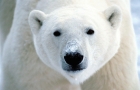
The TV adverts will feature footage of polar bears struggling as they try to cross ice that has been weakened by warming temperatures.
The goal of the campaign, according to Kierán Suckling, the organisation’s executive director, is to urge Americans to sign a petition urging Barack Obama, the US president, to take aggressive action to stem global warming, including using existing laws like the Clean Air Act to make significant reductions in carbon pollution.
“The Arctic is heating up much more rapidly than anywhere else and it is important that we draw people's attention to it,” Suckling says. “What’s more, since the Arctic serves as the planet’s air conditioning, as it warms, the planet is going to warm dramatically. We want the world to really understand the Arctic and what’s happening there.”
SEE VIDEO: Centre for Biological Diversity polar bear PSA (at end of article)
The best way to catch people’s attention, he says, is by putting a polar bear in front of them. Figuratively, that is.
“All animals are equally valuable and amazing products of millions of years of development. But we want to be focusing people’s attention on the Arctic right now. The polar bear is the most effective symbol we have to do that.”
Just as the whale proved as an effective symbol for an issue in the 1970s, spawning the birth of many of the climate groups we know today, Suckling says he hopes the polar bear campaigns can spur people to act to do something to reverse global warming.
“The polar is and should be the new whale. In the first place, polar bears are very endangered, but so is their wider habitat – and not only that, they have the ‘star quality’ it takes to serve as a symbol for global warming in general.”
SEE RELATED: Arctic states vow to help polar bears
A previous public service ad from the centre on the plight of polar bears received a top-10 award after it was rated in the top 10 percent of all public service announcements in the US in 2010, as reported by Nielsen Media Research. That ad was viewed by more than 90 million people.
Suckling expects that the current campaign can surpass those ratings. Conversely, he says there are few other animals – or issues – out there that can connect with people the same way Arctic melting does.
“The Polar bear brings it all together in a single image,” he says.
The centre has run other campaigns, but none match the popularity of those focusing on the Arctic.
“We’ve previously run advertisements focusing on sea level rise – which is also a very real problem,” Suckling says. “But is also more abstract. We used sea turtles as a symbol in that campaign, but they just don’t have the impact that the polar bear does. It is an animal that humans can relate to very quickly.”
SEE RELATED: Requiem for a polar bear
As a wildlife organisation, the Centre for Biological Diversity focused on drawing attention to the effect global warming is having on animals.
“If we used human images we might get similar levels of attention. Especially if we put up some stark pictures of how global warming is hurting Inuit communities. But I don’t think we’d get the same response if we put up a picture of the ringed seal for example though.”
The ads, set to begin airing immediately, can also be seen at www.HelpBears.org.








Most read
