In technology we trust
iAbout Press releases
As part of our continuing efforts to bring you as much information about our region as possible we offer readers a press release service that allows private firms, public agencies, non-governmental organisations and other groups to submit relevant press releases on our website.
All press releases in this section are published in their full length and have not been edited.
If you have a press release or other announcement you would like to have published, please send it to [email protected].
We reserve the right to reject press releases we deem irrelevant or inappropriate.
All material submitted to The Arctic Journal, including pictures and videos, will be assumed to be available for publication by The Arctic Journal and its related entities.
Summer 2016 Mixed Tape
The Arctic Journal will be in summer mode for the next few weeks. Instead of leaving our readers starving for news from the region, we’ve again this year queued up some of our favourite articles from the past few years. Whether you call them summer re-runs, greatest hits, a playlist or a mixed tape from us to you, we hope you’ll have as much fun re-reading them as we did digging them out of the archives.
Also on this year’s mixed tape
An entirely different kind of cold war
The art of imitating the Arctic
The spill that launched a single ship
Tilting at drilling rigs?
Making polar bears dangerous again
Adding a human dimension to climate change
Certain uncertainties
Peripheral kingdom
Irritating the world since 937 (at least)
Sleepless on the ‘Saputi’
A matter of fact
This article is part of our Summer 2016 Mixed Tape series. It was originally published on March 23, 2015.
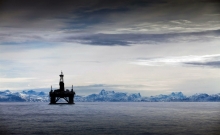
What drives interest in Arctic oil? Among the general public, the conventional wisdom is that the price people are paying at the pump determines how eager oil firms are to go after tough oil.
But for those involved in the industry, there is another, more important consideration: technology. And that, says Hans Kristian Olsen, the managing director of Nuna Oil, Greenland’s nationally owned exploration firm, has only made looking for oil much easier than in the 1970s, when the first studies of his country’s continental shelf were made.
“It’s hard to predict how technology will develop, but it will surely benefit exploration in Greenland and the Arctic,” Mr Olsen told an audience at the 2015 Arctic Technology Conference, currently being held in Copenhagen.
SEE RELATED: Editor’s Briefing | Victory in the Arctic
He points to improvements like better ice-management and satellite imaging that have made it possible for oil firms to shift their interest increasingly further north – in his country from the western coast to the extreme north-east, which saw a group of oil firms issued exploration licences in 2013.
Even though the technology has improved, Arctic oil remains difficult to get at. And factors like extreme weather, remote locations and a lack of infrastructure make exploration and production a costly proposition regardless of which part of the Arctic firms are operating in. But the oil, those in the industry like to point out, is there, and neither price nor the current sanctions on Russia are going to change that.
“The Russian off-shore will be developed,” says Jon Skinner, a former US naval officer turned academic. “What we don’t know is how fast or how environmentally soundly they will do it.”
Part of the reason why governments, especially Russia, and firms are keeping up the chase after Arctic oil, is because there is little alternative.
“Arctic oil is do or die for Moscow,” Mr Skinner says, “and that’s why you see oil and gas decisions being made among the core national leadership. In the Kremlin.”
SEE RELATED: Another nail in the coffin of Greenland’s Arctic oil hunt
In order to keep up the flow of investment into Russia’s oil industry after the sanctions forced Western firms to wind down their activities, Moscow has sought money from Asia and, to a lesser extent, from domestic sources. Neither, Mr Skinner reckons, will be able to compensate for Western money and know-how. Once the sanctions come down, big Western oil firms will pick up where they left off.
For firms, the Arctic is still considered a frontier, but once deposits in other areas become less profitable, they will increasingly shift resources to the region. That, according to promoters, will hasten the pace of development of the technologies they hope will make production there safer and cheaper. Many are also counting on sea ice continuing to recede, making the region more accessible to exploitation.
While the decline in prices has generally been shunted aside, discussions about the impact of oil exploration, have not. Most are optimistic that regulation and technology can prevent spills. Others are realistic.
“It is inevitable that the Arctic is developed,” says Jan Vapaavuori, the Finnish economy minister. “We must ensure that it is done sustainably, and we need to be prepared for the risk that human error will occur.”
Latest news