Tailings for the fjords
iAbout Press releases
As part of our continuing efforts to bring you as much information about our region as possible we offer readers a press release service that allows private firms, public agencies, non-governmental organisations and other groups to submit relevant press releases on our website.
All press releases in this section are published in their full length and have not been edited.
If you have a press release or other announcement you would like to have published, please send it to [email protected].
We reserve the right to reject press releases we deem irrelevant or inappropriate.
All material submitted to The Arctic Journal, including pictures and videos, will be assumed to be available for publication by The Arctic Journal and its related entities.
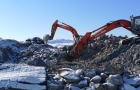
In mining, what comes of out the ground often gets most attention. In Norway, however, conservation groups are turning their focus to plans to allow mining firms to dump soil into fjords.
Norway is one of just a handful of countries that permits tailings, the soil left over after valuable minerals are extracted, to be dumped in coastal waters. The practice is frowned upon by scientists, who say that more needs to be learned about it before it can be permitted.
Nevertheless, Oslo, earlier this year, granted permission to Nordic Mining, an Oslo-listed firm that operates quartz and lithium mines, permission to dump 250 million tonnes of tailings in Førdefjord, some 200km north of Bergen.
SEE RELATED: Here today, ore tomorrow
Now, Olso is considering whether to approve a plan by Nussir, another mining firm, to dump in Repparfjord, an important breeding area for cod and salmon in Finnmark.
Ragnar Olsen, the mayor of Kvalsund, the site of the copper, uranium and thorium mine that would produce the tailings, argues that if the Førdefjord dumping was approved, permission ought to be granted to dump the tailings into Repparfjord. Not everyone agrees.
Havforskningsinstituttet, a marine research organisation that advises policymakers, for example, has cautioned multiple times against allowing tailings from Kvalsund to be dumped into Repparfjord.
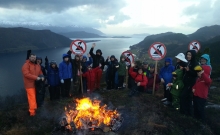
Likewise, Áile Jávo, the president of the Saami Council, is concerned enough about the impacts of the dumping that she brought it up in her address during the biennial meeting of Arctic Council ministers in Iqaluit in April.
Other complications include a suggestion by Naturvernforbundet, a conservancy, that dumping tailings at sea may also violate portions of the European Union’s “Water Framework Directive”, which Norway adopted in 2008.
Conservation groups have in the past complained about tailings dumping both to national agencies as well as to the EFTA Surveillance Authority, the free-trade bloc’s monitoring arm. Whether those objections will stop the practice remains to be seen, but for the time being another reason to protest appears to be on the way.