Capricious no longer
iAbout Press releases
As part of our continuing efforts to bring you as much information about our region as possible we offer readers a press release service that allows private firms, public agencies, non-governmental organisations and other groups to submit relevant press releases on our website.
All press releases in this section are published in their full length and have not been edited.
If you have a press release or other announcement you would like to have published, please send it to [email protected].
We reserve the right to reject press releases we deem irrelevant or inappropriate.
All material submitted to The Arctic Journal, including pictures and videos, will be assumed to be available for publication by The Arctic Journal and its related entities.
Four times as much oil and nearly twice the risk of a large spill. That is the revised conclusion of the US Bureau of Ocean Energy Management’s review of the impact of off-shore drilling in the Chukchi Sea.
The revised report was ordered in January by a federal court after green groups complained that the environmental assessment accompanying the $2.7 billion sale of Chukchi Sea leases in 2008 was inadequate.
The Chukchi Sea is estimated to contain as much as 12 billion barrels of so-called commercially recoverable oil. However, the BOEM’s initial estimate based its calculations on a figure of just 1 billion barrels.
SEE RELATED: Victory in the Arctic
The US 9th District Court eventually ruled in favour of the environmental groups. Calling the assessment “arbitrary and capricious”, it ordered a new study to be carried out.
The BOEM now estimates that 4.3 billion barrels of oil could be recovered over a period of 77 years.
In addition, it also said that chances of a large spill (over 1,000 barrels) was 75%. Initially, the BOEM said the risk was 40%. The increased risk comes from the projected increase in activity connected to the higher amounts of recoverable oil.
With the draft report officially made public today, the clock has begun ticking on a 45-day public comment period. Once the process, which includes seven hearings in Alaska, ends on December 22, the BOEM will begin work on its final assessment.
SEE RELATED: Unrealistic horizon
That will include a decision on whether Shell and the other oil firms that purchased leases in the 2008 auction to hang on to their licences, or whether they must be altered.
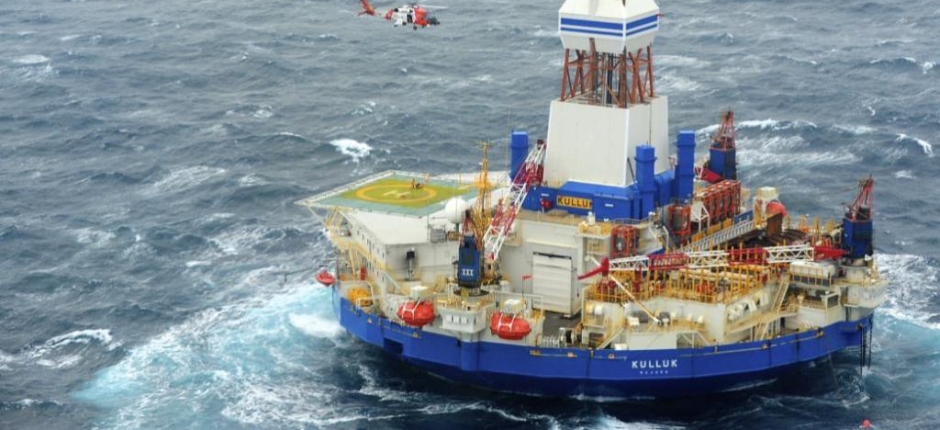
Shell, which spent $2.1 billion for the licence itself, has spent $5 billion on developing its off-shore turf in the Chukchi. However, its drills have remained silent since 2012, when rough weather resulted in the Kulluk, a drilling vessel, running around near Kodiak Island.
Despite cancelling its 2013 season in response to the incidents, Shell maintains that Arctic drilling is safe. It was due to resume exploration in 2014 but called a halt after the ruling was handed down in January. It appeared to be preparing to resume drilling in 2015, but it is likely to await the final outcome of the BOEM review.
If the decision comes after May it is doubtful the company will be able to obtain the drilling equipment and necessary permits to be ready for the summer drilling season.
SEE RELATED: The dilemma stops here
Lisa Murkowski, a pro-development US senator representing Alaska and, starting in January, the head of tis Committee on Energy and Natural Resources, welcomed the revised findings. But with oil firms facing a spring deadline, she urged the BOEM not to delay its final assessment.
“The leaseholders are facing a very tight schedule and have to receive final approval for their drilling plans by early spring in order for there to be drilling next summer.”
Environmental groups said the revised findings served to confirm their fears about Arctic drilling.
“Drilling in the Chukchi Sea puts Arctic people and wildlife at risk from major oil spills,” said Erik Grafe, a lawyer with Earthjustice, one of the organisations that brought the case.
He added that drilling for oil in the rapidly melting Arctic “adds climate insult to climate injury”.