Shot in the foot and tangled up in red tape
iAbout Press releases
As part of our continuing efforts to bring you as much information about our region as possible we offer readers a press release service that allows private firms, public agencies, non-governmental organisations and other groups to submit relevant press releases on our website.
All press releases in this section are published in their full length and have not been edited.
If you have a press release or other announcement you would like to have published, please send it to [email protected].
We reserve the right to reject press releases we deem irrelevant or inappropriate.
All material submitted to The Arctic Journal, including pictures and videos, will be assumed to be available for publication by The Arctic Journal and its related entities.
I was tempted use this week’s column to say a few words about a Greenland’s Aleqa Hammond, her lack of judgement and her lack of respect for an office that she refuses to give up – or about an electorate that chose her to represent them.
Instead, I settled on another recurring issue in Greenlandic politics that has far wider reaching consequences than the problems Ms Hammond has got herself into.
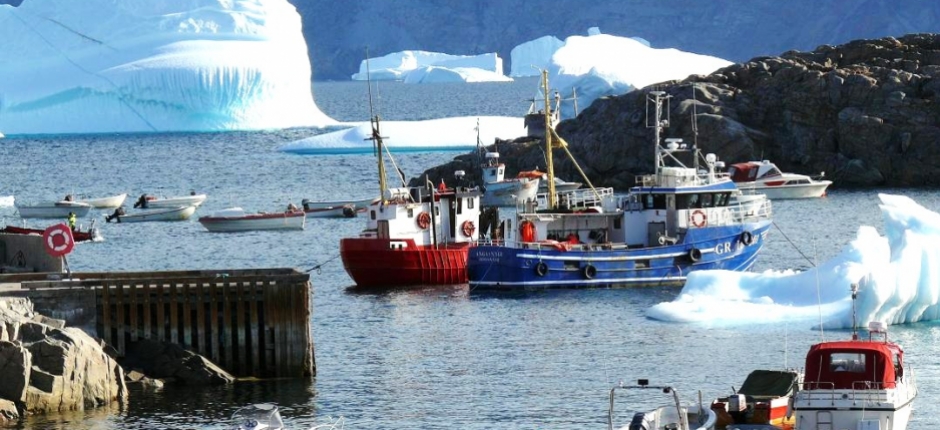
Not more than a few years ago, mackerel fishery was being held up as the new black of the Greenlandic economy. With the results of this year’s season now public – just 40% of the total allowable catch of 85,000 tonnes were landed – it has become apparent this was a gross overassessment.
SEE RELATED: The ones that won’t get away
The disappointing catch isn’t a result of too few fish. The problem was many bad decisions by lawmakers and bureaucrats. The first of these is the late date the lottery to find which firms will be granted a portion of the quota reserved for small operations. The six firms granted a licence were each allowed to catch up to 5,000 tonnes, but since one requirement for being allowed to enter the lottery is that they may not own their own vessel, that leaves them just a month to charter one.
This is where the second problem kicks in: the vessel must be flagged in a country that is a party to the NEAFC management agreement, severely limiting the number of vessels available.
Then there was the 50% hike in the per-tonne fee firms needed to pay the national government.
The result of all this was that only the big firms, which already had experience fishing for mackerel in Greenland, were able to come close to reaching their quota.
SEE RELATED: Fishing-boat diplomacy
There is no political decision that is without consequence. No matter how well intentioned the motivations behind the mackerel-licencing system this year, it winds up being the people of Greenland who pay the price in the form of a loss of 60% of the fees the treasury was expecting to take in.
It may also be the case that some of the firms that were hoping to turn a profit from their participation in the mackerel fishery lost money, but most of them had been set up solely for the purpose of participating in the lottery. Since they hadn’t invested in a boat before the lottery, and since they couldn’t get their hands one after, any losses they might have had were minimal.
Sadly, this is not the first time Greenland has suffered from a self-inflicted wound of this sort. Just a few years back (coincidentally, during the premiership of the above-mentioned Ms Hammond) the government approved a system that would require mining firms to pay royalties: in other words, they would need to pay fees before they began making any money. The result, predictably, was that investors and potential investors lost interest in Greenland.
Another example is legislation requiring that foreigners brought in to work on construction of the infrastructure for industrial projects over a certain size be paid the same amount a Greenlandic worker would be paid. This, regardless of how much the individual could expect to be paid for doing the same job in his/her home jurisdiction.
SEE RELATED: Fish and bargaining chips
Not only does this go against the international norm, it also would have made projects in Greenland significantly more expensive to establish than similar projects elsewhere. The higher cost of doing business further reduces Greenland’s attractiveness to foreign investors. It’s worth noting that since the change was made, no new large projects have begun, while a couple of those that were in the pipeline have been called off.
And when lawmakers aren’t shooting the country in the collective foot, then the bureaucracy is busy strangling it with red tape. Administrative hassles mean that companies seeking to get their projects approved can wind up waiting for longer than is reasonable. Such, at least, has been the experience of some mining firms, who all seem to blame a lack of resources, ability or willingness to expedite requests in a timely fashion. It seems this is also the general impression companies get when they try to work with fisheries officials.
I’m certain that very many of the decisions that, from the outside, appear to do nothing but suffocate initiative, are actually well intentioned. Unfortunately for the companies trying to do business in Greenland, and the country as a whole, their outcomes are more problematic.
The author is a Danish barrister and a columnist for Sermtisiaq newspaper, which is owned by this website’s parent company.