Pride and playfulness
iAbout Press releases
As part of our continuing efforts to bring you as much information about our region as possible we offer readers a press release service that allows private firms, public agencies, non-governmental organisations and other groups to submit relevant press releases on our website.
All press releases in this section are published in their full length and have not been edited.
If you have a press release or other announcement you would like to have published, please send it to [email protected].
We reserve the right to reject press releases we deem irrelevant or inappropriate.
All material submitted to The Arctic Journal, including pictures and videos, will be assumed to be available for publication by The Arctic Journal and its related entities.
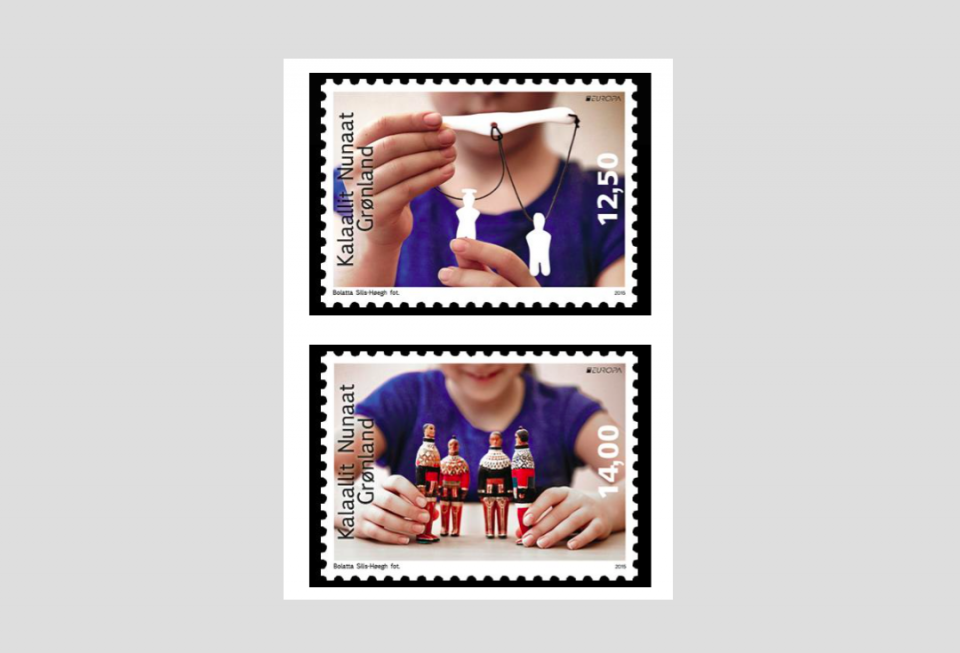
For generations, Greenlanders of all ages have passed time trying to solve the challenge of pulaartut. In order to win the game of skill, whose name means ‘people who visit each other’, players must figure out how to move a male and female figure onto the same side of a loop of string that passes through a solid object, such as a piece of bone or walrus tusk.
Now, the game is being used as the motive for two modern expressions of Greenlandic culture in the most recent series of stamps issued by Tele-Post, the national postal service.
The first stamp features pulaartut as part of a pair of stamps that incorporates Greenlandic toys of the past (see image below). In addition to the stamp with a classic pulaartut game, the set includes a stamp depicting child playing with 1950s-era dolls dressed in traditional western Greenlandic outfits.
SEE RELATED: Editor’s Briefing | Northern pride
Bolatta Silis-Høegh, the photographer whose pictures were used for the stamps, says she was motivated to show how toys can form a connection between past and present.
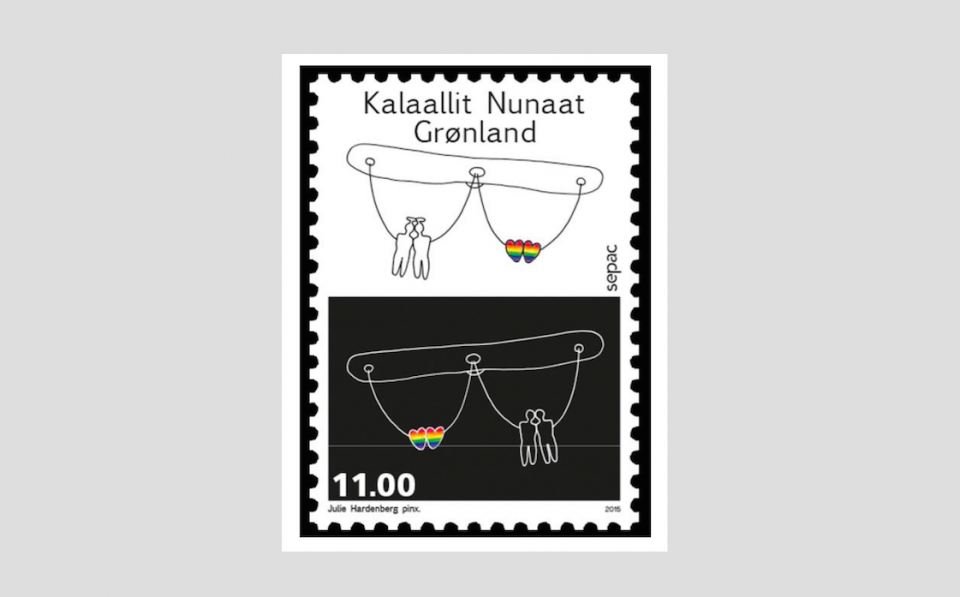
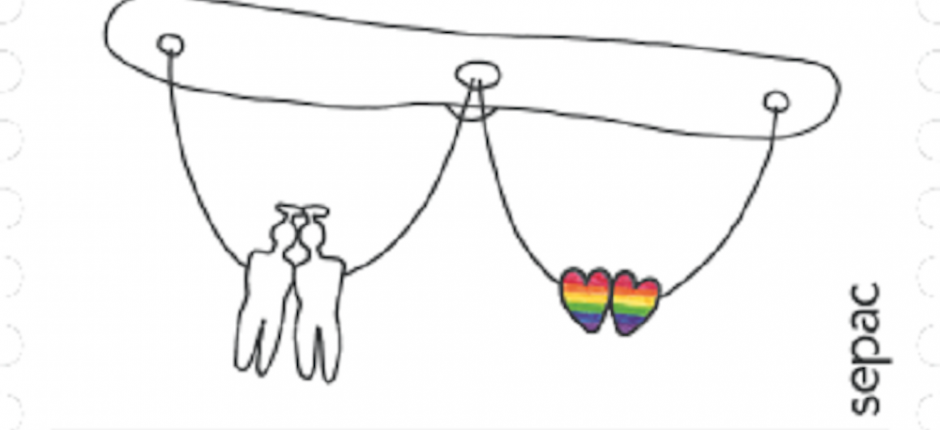
A second, more forward-looking, use of pulaartut, comes in a design commemorating Greenland Pride, an annual festival held by the LGBT (short for lesbian, gay, bisexual and transgender) community (see images above and below).
Designed by Julie Hardenberg, the stamp features two pulaartut games, one with two male figures, the other with two female, and both accompanied by a pair of hearts reminiscent of the rainbow flag representing the LGBT movement.
Hardenberg explains that the overt point of the stamp is to broaden people’s understanding of love as a relationship between two people of the opposite sex.
More symbolically, choosing pulaartut, she says, recognises that love is a game of skill.
Let us hope that it is a winners’s game with multiple combinations.
greenland-pulaartut-stamp.png
greenland-pulaartut-stamp_2.png