Destination: Arctic
iAbout Press releases
As part of our continuing efforts to bring you as much information about our region as possible we offer readers a press release service that allows private firms, public agencies, non-governmental organisations and other groups to submit relevant press releases on our website.
All press releases in this section are published in their full length and have not been edited.
If you have a press release or other announcement you would like to have published, please send it to [email protected].
We reserve the right to reject press releases we deem irrelevant or inappropriate.
All material submitted to The Arctic Journal, including pictures and videos, will be assumed to be available for publication by The Arctic Journal and its related entities.
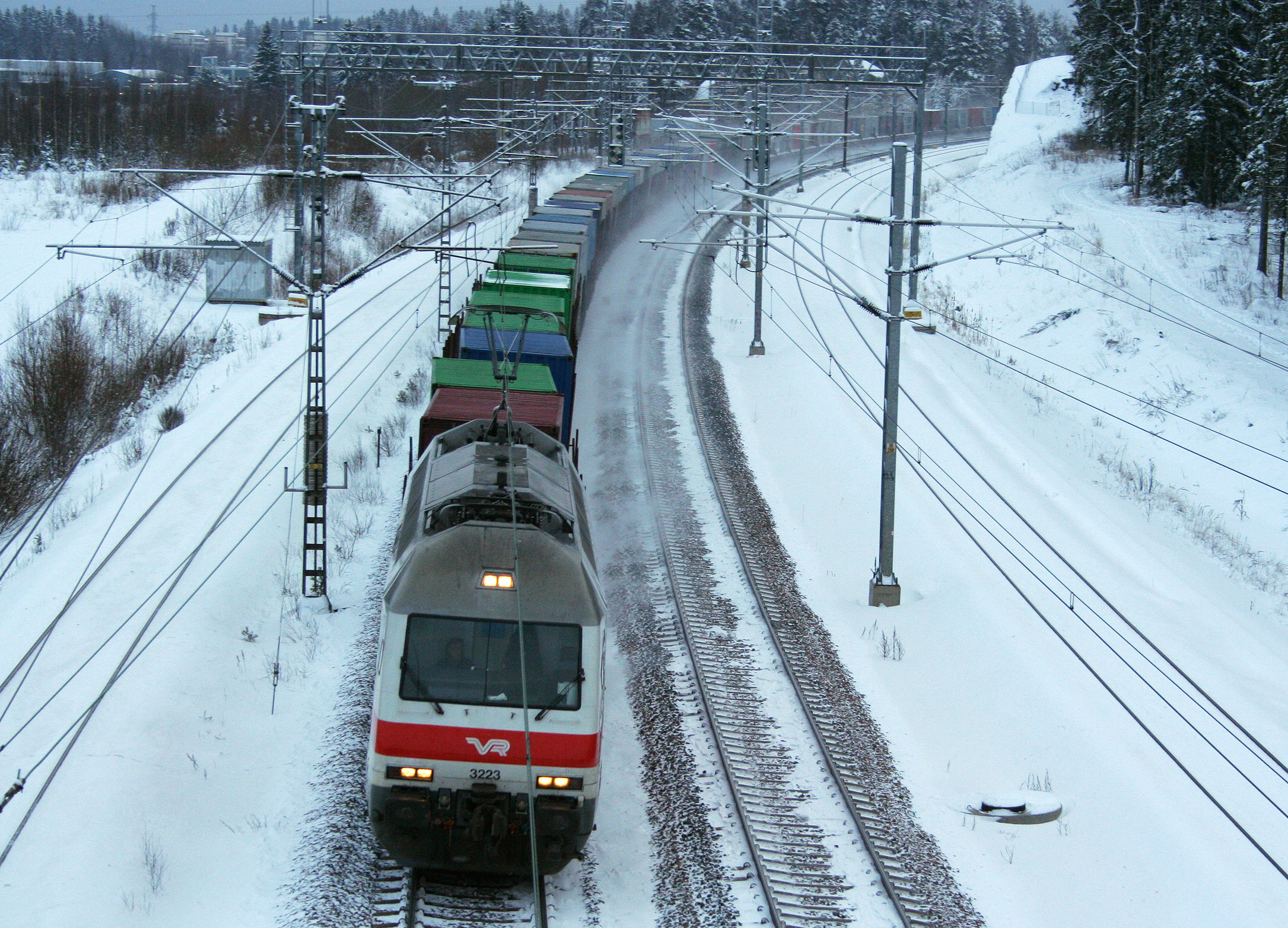
As Finland grapples with the decline of its mobile telephone and paper industries, the country is increasingly turning to logistics as one of its best economic bets.
Although once the end of the line in Europe, the prospect of global warming and an ice-free Arctic has the government laying plans to convert Finland into a hub for logistics by 2030.
In order for that to happen, two things must occur. Ice in the Arctic must continue to melt, making northern shipping lanes a viable alternative to the Suez Canal, and Finland must build a railway connecting the country to the coastlines of one its northern neighbours.
Science is increasingly certain that the first will happen. Lawmakers in Helsinki are doing their part to make sure that the second also comes to pass.
Finland, which has no Arctic coast, has largely been kept out of the region’s natural resource rush. Backers of the plan, however, say the county’s location will give it an advantage as shippers, using newly opened Arctic sea routes, seek to cut their travel times to and from European markets.
SEE RELATED: Finland orders specially designed extreme-cold locomotives
In addition to giving Finnish exporters a port for dispatching their goods to the east, the construction of a railway from the Barents coast to the Baltic would allow ships coming west to avoid having to sail around Scandinavia to reach European ports. Existing north-south rail infrastructure would allow most goods to travel overland to continental Europe, or it could be sailed to northern European ports on Baltic carriers.
Construction of an Arctic railway would be expensive – an estimated €3 billion – but with the global economy coming out of recession, and the demand for Finnish raw materials beginning to rebound, businesses say it is a price worth paying.
A recent government report showed that as many as 40 trains a day could travel from the city of Rovaniemi, some 100km from Finland’s northern Baltic coast, to the Barents Sea coast.
Jyrki Katainen, the Finnish PM, has labelled such a railway “a great opportunity”, and government studies suggest the route will benefit existing industries.
But because Finland lacks a northern coastline, the success of any such plans would be contingent on its ability to Norway or Russia to agree to a deal.
The most obvious choice would be Norway. The port city of Kirkenes lies just 50km from the Finnish border and in discussions about railway construction, Norwegian officials have responded positively to Finnish overtures, although they point out it must be a something other countries in the region are interested in.
Finns say this is the case. In addition to strong commitment by northern Finland communities, Sweden has carried out a benefit study, while Russia is investing in its own Arctic infrastructure. The next step, according, to Martti Hahl from the Barents Center, a regional promotion body, is to push the railway in Brussels.
Hahl reckoned that up to 20 percent of funding could come from the EU, but getting their support would be more likely if Norway were on board. “The driving force behind this initiative must be based in the region itself,” he said.
Another source of funding could be Norway’s sovereign wealth fund, but should the Finns be unable to convince Oslo to chip in the €800 million it would cost to extend the railway from the border to Kirkenes, two other options are possible.
The first is also in Norway, in the coastal city of Skibotn, near Tromsø. The terminus would be further west, and a further ride from Lapland to the coast, but Norway would be able to get away with paying some €200 million less than the Kirkenes option. The route itself, meanwhile, would follow Sweden’s northern border closely, making it more attractive for that country’s heavy industries.
Another option would be to place the terminus in Murmansk, some 250km from the Finnish border. There, plans are already in the works to build a €3 billion transport hub that would see the development of a year-round deep-water port. The facility would be a centre for trans-shipment of containers and bulk cargo. Even more promising for Helsinki, they would like to see it integrated into the international north-south transport corridor.